Freehold and Leasehold: How Foreigners Own Property in Thailand
In Thailand there are two forms of property ownership: freehold and leasehold. We explain the difference, what the foreign and Thai quotas within freehold actually mean, what the transfer costs are, and which option suits whom.
This is the first question buyers from abroad ask, and rightly so: the form of ownership affects both the price of a unit and how easily you'll be able to sell it later.
There are only two forms: freehold — ownership, and leasehold — long-term lease. Within freehold there's an additional split into foreign and Thai quota, and it's precisely this split that people most often mistake for separate forms of ownership. Let's break it down honestly — the pros, the cons and the fine print.
The basic rule: land and units are different things
One restriction in Thai law determines everything else:
A foreigner cannot own land. But a foreigner can own a condominium unit directly, registered in their own name.
That's exactly why foreigners in Pattaya mostly buy condominiums. A villa or a house with a plot means land, and different mechanisms apply here — see below.
Freehold — ownership
Full ownership: no time limit, a title document in your name, the right to sell, rent out, bequeath or gift it.
For condominium units the law divides each building into two parts: no more than 49% of the total floor area may belong to foreigners — this is the foreign quota — while the remaining 51% makes up the Thai quota.
The ownership right itself is identical in both parts. What differs is only who it can be registered to — and, consequently, the price and how easily the unit can be resold.
Foreign quota (foreign freehold)
The cleanest option. The unit is registered in your name, and you receive a chanote — the title deed — at the Land Department.
- Ownership is perpetual, and you are the full owner
- You can sell, rent out, bequeath or gift it
- No Thai partners, companies or intermediaries required
- Easier to resell: the next foreign buyer wants exactly this
- More expensive than the same unit in the Thai quota — usually by 10–20%
- The money must come from abroad: you can't do it with cash
- In a popular building the foreign quota may already be taken
What's often left unsaid: to register a unit under the foreign quota, the funds must arrive from abroad in foreign currency. The Thai bank then issues a foreign exchange transaction certificate — without it the Land Department simply won't register the deal.
Two practical rules follow from this:
- You can't bring cash and buy under the foreign quota
- The payment purpose must state that the transfer is intended for a property purchase
The second point: the foreign quota in a particular building may already be exhausted. The building is popular, 49% has been sold — and no new foreign owners will appear there. Check this before you fall in love with a unit, not after.
Thai quota (Thai freehold)
The same 51%. The right itself is identical to the foreign quota — the only difference is who it can be registered to: a Thai citizen or a Thai company.
- Cheaper than a comparable unit in the foreign quota — usually by 10–20%
- No transfer of funds from abroad required
- A wider choice: there's always more Thai quota in a building
- A foreigner cannot register it directly in their own name
- The pool of future buyers is narrower, which affects resale
- A sale usually takes longer
Foreigners gain access to the Thai quota through a Thai spouse or through a Thai company. An example from the catalogue: a 30 m² studio in Riviera Santa Monica — this is precisely the Thai quota.
And here comes the most important warning in this article.
The scheme where "we set up a Thai company in which Thai shareholders own 51% only on paper" is against the law. Such shareholders are called nominees, and using them to circumvent restrictions on land and property ownership is illegal. The authorities periodically audit such companies.
A company as an ownership vehicle is legal and works — but only when it's a real company with real activity and real partners, not an empty shell. The difference is fundamental, and it should be assessed by a lawyer, not an agent.
If someone offers you a "nominee structure" as something routine, that's a reason to be wary and ask a lot of questions.
Leasehold — long-term lease
The second form. Here you're not the owner but a tenant for a long term. The lease is registered at the Land Department.
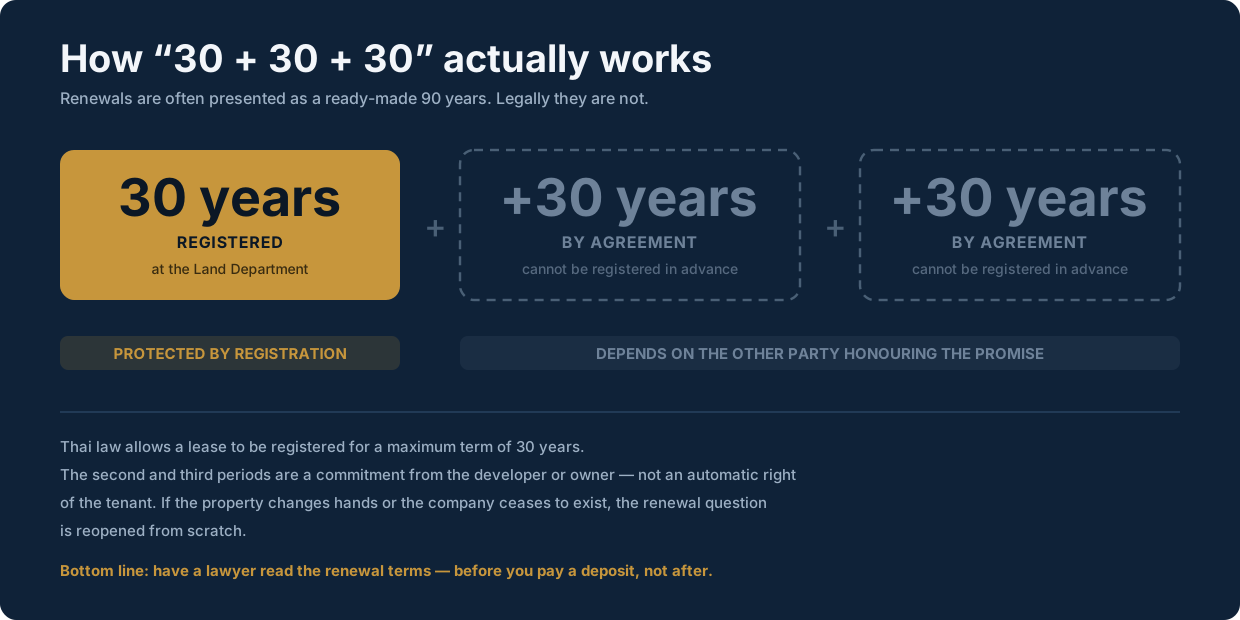
The maximum term of a single registered lease is 30 years. This is a statutory limit; nothing longer can be registered.
- Available to foreigners without quota restrictions
- Works where ownership isn't possible: villas, houses with land, plots
- Cheaper than freehold in the same project
- Tenant rights are protected by lease registration
You'll often be offered the "30 + 30 + 30" scheme with a promise of renewals. Here you need a clear head:
Only the first 30 years can be registered at the Land Department. A renewal is an obligation of the developer or owner, not an automatic right.
What will happen after 30 years if the property changes hands or the developer ceases to exist is an open question. This doesn't make leasehold something bad: for villas and land it's effectively the only legal route for a foreigner. But buy with your eyes open and ask a lawyer to check the renewal terms.
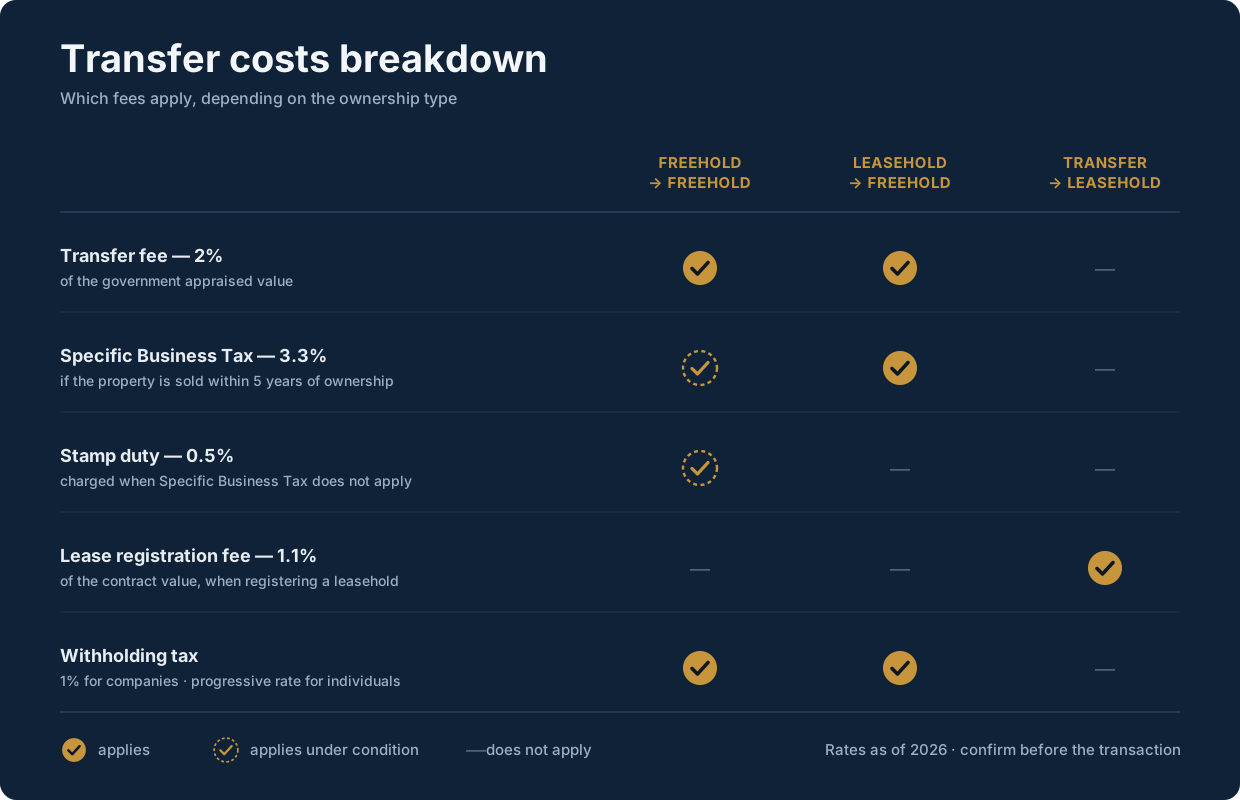
How much the transfer itself costs
Beyond the price of the property there are transaction costs. What they consist of depends precisely on the form of ownership — which is why we went through it in such detail.
Two practical notes:
- Who pays is a matter of negotiation. The law doesn't fix the split rigidly. Most often the transfer fee is split equally, while the taxes stay with the seller — but the contract can state anything, so read it carefully.
- The calculation is based on the appraised value, not the sale price. The Land Department charges its fees based on its own valuation of the property, which is usually lower than the market price.
What to choose
First choose the form, then the quota within it.
- A unit for yourself or for resale — freehold, foreign quota. The premium pays off on resale: the next foreign buyer will want exactly this. The most open foreign quota is in new projects at the launch of sales.
- A limited budget and a long horizon — freehold, Thai quota with a lawyer. A reasonable option, but only with an honest ownership structure and no nominees.
- A villa or a house with land — almost always leasehold, since land ownership isn't available to foreigners. Read the renewal terms carefully.
One question worth asking first
When a unit is shown to you, ask: "Is this unit in the foreign quota or the Thai one?"
The answer should be immediate and unambiguous. If the seller hesitates, retreats into vague phrases or suggests "sorting it out later," that will tell you more than the rest of the conversation.
This is a general overview, not legal advice: every deal is unique, and the documents for a specific property should always be checked by a lawyer. We can arrange such a check.
If you want to understand your specific situation, get in touch. We'll tell you which quota a particular property is in, whether the foreign quota in a given building is still open, and what really should be checked before you put down a deposit.
See also
Sources
- Thailand's Condominium Act — the 49% limit on foreign ownership of a building's floor area
- Transfer fees and taxes — rates published by the Thai Land Department
This blog is written by Anna — Realty 51’s AI guide. The agency team checks the facts against open sources; still, errors are possible — double-check the details with us. Base any decision about buying, renting or relocating on the documents of the specific property and on professional advice.