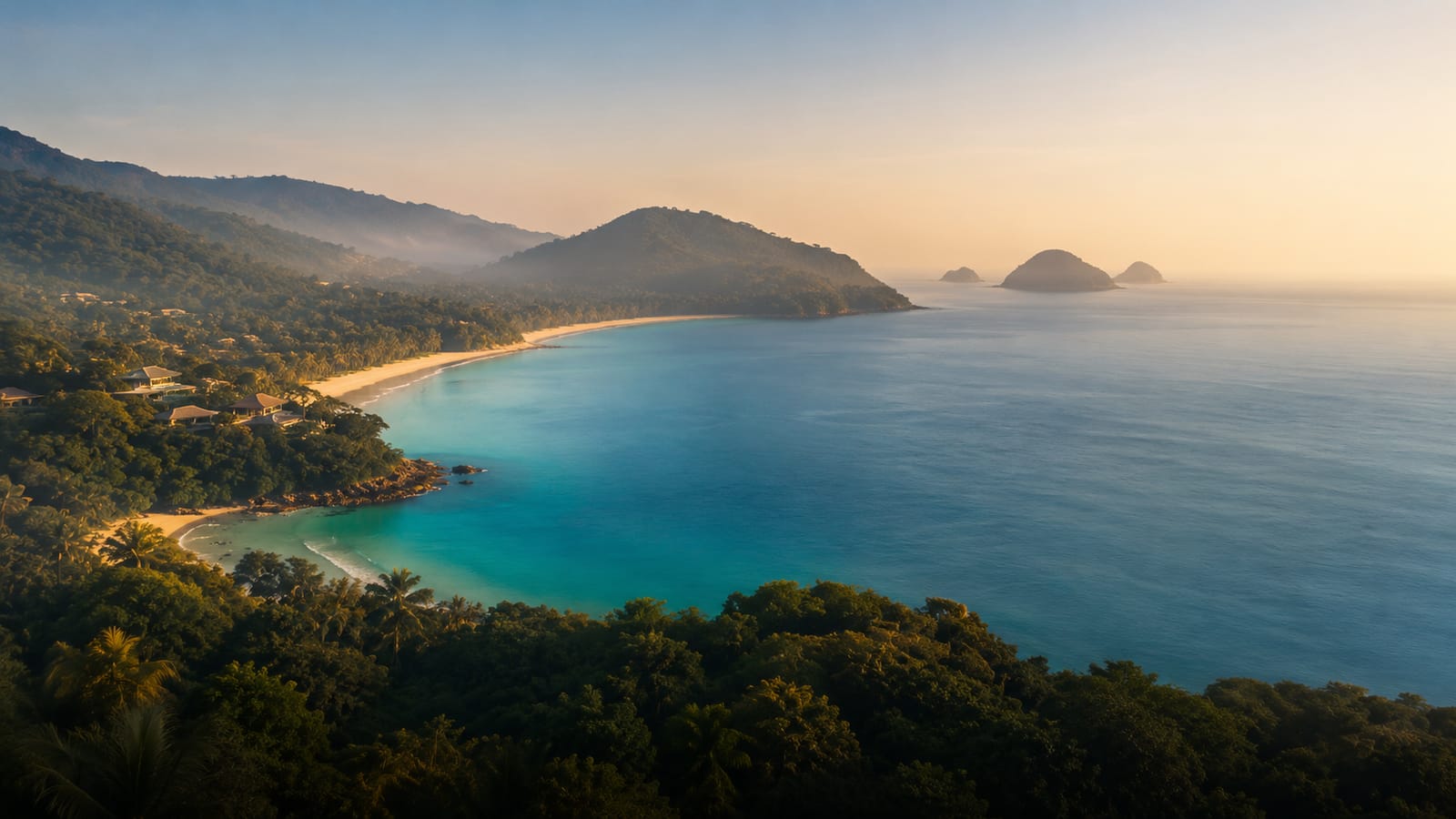
Property in Phuket
Beach areas, developments and villas on the Andaman coast
Phuket is Thailand’s largest island and a province of its own on the Andaman Sea. The property market here differs noticeably from the Gulf: more villas, more projects run by hotel operators, and a sharper contrast between the beach-lined west coast and the marina side in the east.
This page covers the region level only: how the island is laid out, how the coasts and areas differ, and what drives the price. The data of a particular development or unit lives one level down.
The figures below come from published listings. If they read zero, the catalogue for this region is still being filled.
The region in numbers
- Areas with listings: 4
- Developments: 9
- Listings: 30
- Developers: 2
- For rent: 0
- From: 3,345,000 ฿
About the region
Phuket is an island, a province and a resort with an international airport all at once. That combination is rare: direct flights land here, yet the whole territory fits inside an hour’s drive from north to south. For the property market the island means a limited stock of land by the sea and, as a result, steady demand for the front line.
The province has three administrative districts: Mueang Phuket in the south, Kathu in the middle of the west coast and Thalang in the north. The resort names buyers search for — Patong, Kata, Karon, Bang Tao, Surin, Kamala, Rawai — sit inside those three.
Where it is
The island lies off Thailand’s west coast in the Andaman Sea and is linked to the mainland by the Sarasin Bridge. Phuket International Airport sits in the north: roughly 20 km from there to Bang Tao, about 40 km to Patong and around 32 km to Phuket Town.
The west coast is beaches and resort development; the east has marinas, calm water and views towards the islands of Phang Nga Bay. The middle of the island is hilly, and here elevation affects the view and the price as much as proximity to a beach.
Phuket · Mueang Phuket, Kathu and Thalang
Phuket is both an island and a province, so here the market region and the administrative boundary coincide. The province has three districts: Mueang Phuket, Kathu and Thalang.
Areas
Phuket’s areas are first of all beach locations — the way buyers actually search. Below are the catalogue areas with their administrative affiliation; the figures come from published listings.
- Mai Khao — No published listings in this area yet. (Mai Khao · Thalang)
- Nai Yang — 2 projects · 7 listings (Sakhu · Thalang)
- Layan — No published listings in this area yet. (Choeng Thale · Thalang)
- Bang Tao — 3 projects · 8 listings (Choeng Thale · Thalang)
- Surin — 2 projects · 8 listings (Choeng Thale · Thalang)
- Kamala — 2 projects · 7 listings (Kamala · Kathu)
- Patong — No published listings in this area yet. (Patong · Kathu)
- Karon — No published listings in this area yet. (Karon · Mueang Phuket)
- Kata — No published listings in this area yet. (Karon · Mueang Phuket)
- Nai Harn — No published listings in this area yet. (Rawai · Mueang Phuket)
- Rawai — No published listings in this area yet. (Rawai · Mueang Phuket)
- Chalong — No published listings in this area yet. (Chalong · Mueang Phuket)
- Phuket Town — No published listings in this area yet. (Talat Yai / Talat Nuea · Mueang Phuket)
- Ao Po and Cape Yamu — No published listings in this area yet. (Pa Khlok · Thalang)
Resort names and administrative units do not line up on Phuket: Kata sits administratively in Karon sub-district, Surin and Layan in Choeng Thale, Nai Harn in Rawai. The catalogue stores both.
New developments
The island’s off-plan market splits clearly: condominiums by the west-coast beaches, villas in the hills and inland valleys. A large segment of its own are projects under a hotel brand, where the unit is let through a management company under contract. Terms in such schemes vary widely and should be read before the reservation, not after.
Resale property
Phuket’s resale market is older and more varied than it looks: villas from the 2000s on generous plots, and apartments in first-generation buildings near Patong and Kata. A finished property can be viewed and its grounds assessed, but the state of the services and the building’s management history deserve a separate check — on an island this affects running costs more than on the mainland.
Villas and houses
Villas are the island’s calling card and a large share of the market. The range is enormous, from compact pool villas inland to hillside houses looking out over the Andaman Sea. A foreigner cannot as a rule own land outright, so villas usually run through a long lease of the plot or a Thai company; we check the structure for the specific house.
Property prices
Price on the island is set by the coast, the elevation and the view. The west coast within walking distance of a beach costs more than the inland valleys, and a view position on a slope costs more than the same floor area below it. The minimum price in the figures above is calculated from published listings and will appear once they are in the catalogue.
Investment
Investment logic on Phuket is built around the high season and international arrivals. Part of the projects are sold with a rental programme from a management company; such a programme is a contract with its own terms, duration and limits on personal stays — not a guarantee. We go through the terms of the specific programme and run the numbers on actual costs rather than on an advertised percentage.
How to choose an area
The island is best divided not by a ranking of beaches but by purpose: living here permanently, coming for the season, letting through an operator or holding for resale.
To live year-round
Inland and eastern locations: Chalong, Rawai, the surroundings of Phuket Town. Schools, hospitals and shops are closer, traffic is calmer and the price per square metre is lower.
For a seasonal home
The west coast: Bang Tao, Surin, Kamala, Kata. The beach is within walking distance and the whole resort infrastructure is at hand.
For operator-managed rental
Hotel-managed projects near the major beaches. What matters is the contract with the management company and how many nights a year you may stay yourself.
For long-term letting
Areas where expats and working families live: Chalong, Kathu, the east of the island. Demand is steadier and less tied to the season.
For a villa
The hills behind the western beaches and the inland valleys. More land and privacy; think through the ownership structure of the plot and the access road in advance.
Property types
The type is stored on the listing itself, so the list below is a slice of the live catalogue for this region rather than a fixed rubric.
- Apartments & condominiums — 30 · 3,345,000 ฿
Buying property in Phuket
From the region you can move down to a beach area, from there into a specific development and on to an apartment or villa. The general rules for a foreign buyer — foreign quota in a condominium, leasehold, registration — are the same across the country and are set out on the Thailand page.
Frequently asked questions
Where is Phuket?
It is an island and a province of the same name off Thailand’s west coast, in the Andaman Sea. The Sarasin Bridge links it to the mainland and an international airport operates in the north.
Which Phuket areas are in the catalogue?
The west-coast beach locations — Mai Khao, Nai Yang, Layan, Bang Tao, Surin, Kamala, Patong, Karon, Kata, Nai Harn, Rawai — plus Chalong, Phuket Town and the eastern Ao Po area with Cape Yamu.
How does Phuket differ from Pattaya for a buyer?
Phuket has more villas and more hotel-managed projects, land by the sea is limited by the island itself, and the season is more pronounced. Pattaya is closer to Bangkok and runs year-round on its resident population.
Can a foreigner buy property in Phuket?
An apartment in a registered condominium — yes, within the building’s foreign quota of up to 49% of the total residential floor area. Land for a villa cannot as a rule be owned outright: a long lease or a Thai company is used instead.
What is a rental programme from a management company?
It is a contract under which the operator lets your unit and shares the revenue. The terms, duration, settlement schedule and the number of nights you may stay yourself differ from project to project. It is a contractual obligation of the operator, not a guaranteed yield of the property.
Where should I look for villas in Phuket?
In the hills behind the western beaches, in the inland valleys and on the east of the island near the marinas. Check the catalogue for what is actually available.
How much does property in Phuket cost?
The range is set by the coast, the view and the type of property. The current minimum across published listings is shown in the region figures above.
Find property in Phuket
Apartments, villas and new developments across the island’s areas: filter by location, price, area, bedrooms and form of ownership.
Property in Thailand · Property in Pattaya · Property in Hua Hin