Central Pattaya District Guide: Living, Infrastructure, Transport
Central Pattaya is the heart of the city between North Pattaya Road and South Pattaya Road: Pattaya Beach, Beach Road, Second Road, shopping malls, markets and hundreds of cafés. Everything you need is within walking distance, and an apartment in the centre is the easiest to rent out — tourists and tenants look for homes here first. Below — where the district is, which parts it divides into, where it is quieter, what the infrastructure is like, what property is for sale and how a foreigner can buy it.
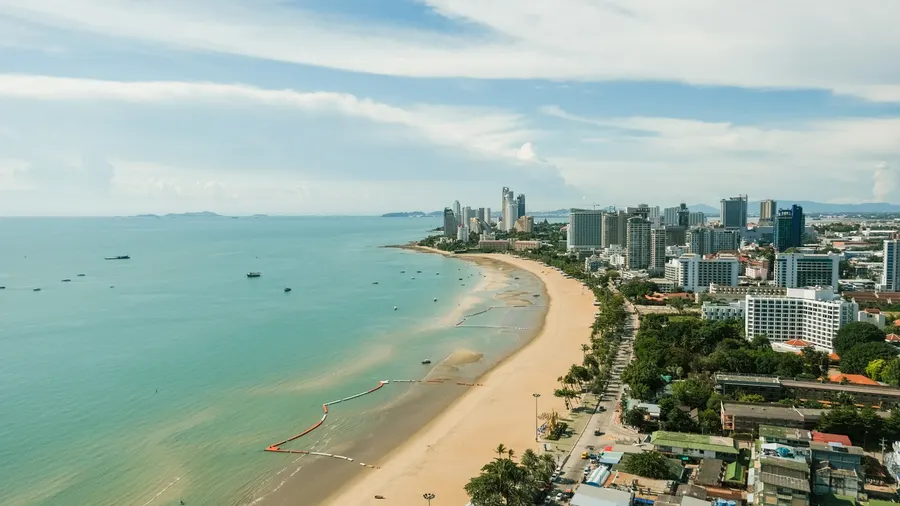
- Everything close, no car needed — The beach, malls, markets, clinics, banks and cafés are within walking distance. Songthaews run along Beach Road and Second Road all the time, and any part of the city is minutes away.
- The most liquid district for rentals — Tourists and tenants staying a month or longer look for homes in the centre first. Apartments here stand empty less, and they are easier to sell later.
- The sea inside the city — Pattaya Beach runs along the whole district. A morning walk on the promenade, a sunset over the bay in the evening — a few minutes from home.
- From studios to penthouses — The centre offers compact studios near Soi Buakhao, apartments in new high-rises with bay views and premium projects by the sea.
Central Pattaya on the map
Central Pattaya is the part of the city between two main streets: North Pattaya Road in the north and South Pattaya Road in the south. To the west the district is bounded by Beach Road and Pattaya Beach, to the east by Sukhumvit. Central Pattaya Road, which locals call Pattaya Klang, runs through the middle of the district.
Inside, the district is crossed by streets running parallel to the sea: Beach Road along the beach, Second Road a little further inland, then Soi Buakhao and Third Road. Between them are dozens of numbered sois (side streets), where most of the housing is. The sois from the sea to Second Road are numbered in order, so addresses in the centre are easy to find: the soi number tells you how far north or south in the district you are.
To the north the centre merges into North Pattaya and Naklua, to the south into South Pattaya with Walking Street and Bali Hai Pier. Pratumnak Hill and Jomtien are 10–15 minutes away by car, East Pattaya beyond Sukhumvit about 10 minutes.
For a buyer this means one thing: the centre is the most convenient place to live without a car. Almost everything you need day to day is within 10–15 minutes on foot, and the rest of the city within 15 minutes by car.
Parts of Central Pattaya: where to look for an apartment
The centre is not uniform. The same apartment by the sea and near Third Road differs both in price and in lifestyle. So it is worth deciding first which part of the district suits you.
Beach Road and the beachfront
The most expensive and most touristy part of the district. Along the beach are hotels, restaurants and a promenade for walking. Apartments here are valued for bay views and closeness to the sea. The downsides are noise, crowds of tourists and little greenery. Beachfront homes are most often bought for winter stays or for renting to tourists.
Between Beach Road and Second Road
Short sois with cafés, small hotels and residential buildings. The beach is a few minutes' walk away, and so are the malls. A good option for those who want to live in the thick of the city, but not on the noisy promenade.
Second Road
The district's second main street. Here are malls, banks, pharmacies, clinics and songthaew stops. Living on Second Road is convenient, but apartments facing the street are noisier than those facing courtyards. Traffic is heavy at rush hour.
Central Pattaya Road (Pattaya Klang)
A wide street across the whole district from the sea to Sukhumvit. Along it are shops, banks, a hospital, car showrooms and offices. It is the business axis of the centre: from here it is easy to get to Sukhumvit and other districts.
Soi Buakhao and around
An area of markets, street food and inexpensive cafés. Many long-term tenants and retirees live here: prices for everything are lower than by the sea, and life goes on all day. Apartments near Soi Buakhao are usually more affordable than those closer to the beach.
Near Third Road and towards Sukhumvit
The quietest part of the centre. There are more residential complexes, fewer tourists and parking is easier. The sea is 10–15 minutes away by car or motorbike. It suits those who want to live in the centre but rest from it at home.
Noise and quiet: where it is calmer to live
The centre is a lively district, and this matters when choosing an apartment. The noisiest places are Beach Road in the evening, stretches near bars and Soi Buakhao during market hours. The quietest are the deep sois between Second Road and Third Road and buildings closer to Sukhumvit.
There is also a difference within one complex. Apartments on high floors with windows onto a courtyard or pool are noticeably quieter than street-facing windows on lower floors. At viewings we look at what is opposite the windows and what is open nearby in the evening.
If quiet matters most but you want to live close to the centre, also look at Pratumnak or Wongamat: the centre is 5–10 minutes away, and the evenings there are noticeably calmer.
Pattaya Beach and the promenade
Pattaya Beach runs along the whole centre. It is a city beach: busy, with sunbeds, cafés and water activities. People swim here less than in Jomtien or Wongamat, but the promenade is the main place for walks, jogging and sunsets.
For a resident of the centre the beach is less about swimming and more a way of life: a morning run along the sea, coffee with a bay view, an evening stroll. For swimming many go to neighbouring beaches or to the islands — ferries to Koh Larn leave from Bali Hai Pier, about 10 minutes from the centre.
Along Beach Road runs a wide pavement with palm trees and benches. In the evening locals and tourists stroll here, and the sunset over the bay is one of the reasons sea-view apartments in the centre are so valued.
What to see and do
The centre concentrates most of the city's entertainment: malls with cinemas, restaurants of every cuisine, night markets, gyms, spas and massage salons. Walking Street is a few minutes away by songthaew, Bali Hai Pier about 10 minutes.
At weekends residents often leave the city: to Jomtien's beaches, the Pratumnak viewpoint, the parks and lakes of East Pattaya. From the centre all of this is within half an hour.
Shopping malls: what is where
In the centre and on its edges are the city's largest shopping malls. Central Festival stands on Beach Road by the sea, Terminal 21 at the junction with North Pattaya Road, on the border with North Pattaya. The malls have supermarkets with imported food, cinemas, food courts, pharmacies, electronics and clothing stores.
Besides the big malls, the district has dozens of small shopping complexes, supermarkets and corner shops. Many convenience stores are open 24 hours, so you can buy food, water or medicine at any time.
Markets and street food
Around Soi Buakhao and Third Road there are markets with fruit, vegetables, seafood and ready meals. Both locals and foreigners who have lived in Pattaya for years eat here. Food at the market is noticeably cheaper than in cafés by the sea.
In the morning the markets have fresh produce, in the evening ready food: grilled fish, soups, salads, sweets. For those who live in the centre permanently, the market often replaces the kitchen: you can cook at home less and still eat cheaply and with variety.
Nightlife and how to live next to it
The centre is part of tourist Pattaya, and there is nightlife here too: bars, clubs, restaurants with music. Most of it is concentrated near Beach Road, on certain streets between Beach Road and Second Road and closer to Walking Street in the south.
You can live near nightlife without suffering from it. Choose an apartment in a soi without bars, on a high floor, with windows onto the courtyard. Before buying, visit the building on a Friday evening: you will immediately see what the noise is like at the busiest time.
What the district lives on
Shops and malls
Malls, supermarkets and 24-hour convenience stores are on every major street. You do not need a car for shopping: most shops are within walking distance.
Cafés and restaurants
The centre has the largest choice of cafés and restaurants in the city: Thai, European, Russian, Japanese, Indian cuisine, coffee shops and bakeries. You can eat cheaply at the markets and expensively in restaurants by the sea and on hotel rooftops.
Healthcare
Private hospitals and clinics operate in and near the centre, and there are pharmacies on almost every street. Many doctors speak English, and large hospitals have interpreters. The big private hospitals are a few minutes away by car.
Schools and kindergartens
The centre has kindergartens and small schools, but Pattaya's main international schools are in East Pattaya. Families with school-age children drive there from the centre or use the school bus; the journey usually takes 15–25 minutes.
Sport and leisure
Gyms, Muay Thai camps, yoga studios and swimming pools — the centre has plenty of all of them. The promenade suits running and walking, and early mornings suit cycling, while the roads are still empty.
Banks and services
Thai bank branches, exchange offices, the post office, mobile operator service centres and immigration agencies are all in the centre. This is convenient in the first weeks after moving, when you need to open an account, buy a SIM card and arrange documents.
Transport and getting around
The main transport in the centre is the songthaew, a blue pickup with benches. They run in a loop along Beach Road and Second Road, and fares are cheap. There are also app taxis, motorbike taxis and car and motorbike rentals.
Bangkok and Suvarnabhumi Airport are about 120–150 km away by motorway, that is an hour and a half to two hours. From the centre it is easy to get onto Sukhumvit and the motorway to Bangkok. U-Tapao Airport is about 40–50 minutes away. The bus station with buses to Bangkok is on North Pattaya Road, next to the district border.
Car and parking in the centre
Living without a car is easier in the centre than in any other district of Pattaya. If you do need a car, check when choosing a complex whether there is parking and whether a space is assigned to the apartment: older buildings by the sea often have little parking.
Second Road and Beach Road have traffic jams at rush hour and in high season. Residents of the centre find it easier to get around by songthaew, taxi or motorbike, and to use the car for trips out of town.
High-rises in the centre: what to check
New high-rises in the centre offer bay views and facilities inside: pool, gym, co-working space, security. When choosing, check what will be in front of the windows in a few years, how many lifts the building has, how parking is organised and what the maintenance fee is.
For new developments we check the developer in advance: how many buildings it has completed, which legal entity the project is registered to and whether there are building permits.
The resale market: ready apartments in the centre
The centre was one of the first areas to be built up, so there are many ready apartments here. Among them are apartments in buildings ten to twenty years old with large floor areas and apartments in recently completed high-rises.
Older buildings have their advantages: spacious layouts, often the best spots by the sea. The downsides are outdated lifts and building systems, sometimes fewer facilities. When buying a ready apartment we look at the building's condition, the sinking fund, maintenance debts and the owner's documents.
Life in Central Pattaya: pros and cons
Pros
- Everything within walking distance: the beach, shops, markets, doctors.
- You can live without a car.
- The biggest choice of cafés and entertainment.
- High rental demand and liquidity on resale.
- Banks, services and immigration agencies nearby.
Cons
- Noisier than other districts.
- Little greenery and few parks.
- A city beach; many go elsewhere to swim.
- Traffic jams on Second Road and Beach Road at rush hour.
- Older buildings by the sea have little parking.
Central Pattaya or neighbouring districts
The centre or North Pattaya
North Pattaya and Naklua are calmer, with Wongamat Beach and more premium complexes by the sea. The centre is livelier and more convenient for living without a car.
The centre or South Pattaya
South Pattaya means Walking Street, Bali Hai Pier and the high-rises on Thappraya Road. The centre is a little calmer and closer to the main malls.
The centre or Jomtien
Jomtien is a long beach and an unhurried life, the centre is infrastructure and the rhythm of a big city. Jomtien is 10–15 minutes from the centre.
The centre or Pratumnak
Pratumnak is a quiet green hill with small beaches, the centre is street life and everything close by. Pratumnak is chosen for quiet, the centre for convenience.
High and low season in the centre
High season runs from November to March: more tourists, higher rents, busier streets. In low season, from May to October, the centre is calmer, and renting is easier and cheaper. For an owner this means: with short-term rentals income depends more on the season, with annual leases it is steadier.
Rainy season in the centre
From May to October there are tropical downpours, usually short and heavy. After heavy rain some streets in the centre briefly flood, especially in low-lying spots. This is not a problem for an apartment, but when choosing a building pay attention to the car park entrance and the level of the ground floor.
Cost of living in the centre
Costs in the centre depend on your lifestyle. Food at the markets and in local cafés is cheap, restaurants by the sea are more expensive. Electricity and water are paid by meter; in summer the main item is air conditioning. Transport costs little if you use songthaews.
Central Pattaya for different goals
For year-round living
The centre is convenient for permanent living: everything is close, doctors and shops work without breaks, you can manage without a car. For quiet, choose sois closer to Third Road.
For remote work
Lots of coffee shops and co-working spaces, good internet, everything nearby. For work, apartments with a separate area and quiet windows are more comfortable.
For families with children
It works if doctors and shops nearby matter. The international schools of East Pattaya are 15–25 minutes away by car.
For retirees
Many retirees choose the centre because everything is close: markets, doctors, cafés and friends. Apartments near Soi Buakhao and in quiet sois offer city life without extra noise.
For investment
The centre is one of the most liquid districts for rentals and resale. Demand holds all year, and rents rise in high season.
Safety and order
The tourist police work in the centre, and the streets are busy until late. Residential complexes have security and key-card access. The usual rules of a resort town apply: watch your belongings in crowds and do not leave valuables in sight on a motorbike.
Who rents apartments in the centre
Apartments in the centre are rented by tourists for a month or longer, foreigners working in the city, remote workers, retirees for the winter and Thais working in malls and offices. This varied demand is one of the reasons an apartment in the centre rarely stays empty for long.
Reselling an apartment in the centre
Apartments in the centre sell faster than in remote districts: there are always buyers for them, both for living and for renting out. The most important things are the right price, good photos and documents in order. We help with valuation and sale, including remotely by power of attorney.
The centre and the climate: what matters for an apartment
The hot, humid climate calls for good air conditioners and ventilation. West-facing apartments heat up more in the afternoon, but they look out on the sunset over the bay. In the rainy season check for leaks around the windows and on the balcony.
Internet and phone
The centre has good mobile coverage and many home internet providers. In most condominiums internet is connected within a few days. For remote work, check in advance which provider serves the building.
Electricity and water
In the centre's condominiums electricity and water are usually paid by the apartment's meters. The bill comes once a month and can be paid at a convenience store, through a banking app or at the management office. Air conditioning uses the most electricity, so bills are higher in summer. When the apartment is rented out, meter readings are recorded at the tenant's move-in and move-out. If the apartment stands empty for a long time, arrange with the management office or with us for the bills to be paid on time so that water and electricity are not cut off.
International community
Foreigners from many countries live in the centre: Russian speakers, Europeans, Chinese, Indians. Many shops, clinics and services work in English, and some in Russian too.
Instalments and payment methods
Most new developments are sold with interest-free instalments until completion. Ready apartments are usually paid in one sum at registration. Thai banks rarely give mortgages to foreigners, so developer instalments are the main way to spread the payment.
The first weeks in the centre: where to start
Buy a SIM card, open a bank account, connect internet in the apartment, find the nearest market, pharmacy and clinic, learn the songthaew routes. In the centre all of this can be done on foot in a couple of days.
A walk through the centre: a short route
To understand the district, walk it. Start in the morning on the Beach Road promenade: the sea, palm trees, joggers and the first cafés. Then go up one of the sois to Second Road — here are the malls, banks and the flow of traffic. Further on, across Central Pattaya Road, come out at Soi Buakhao: markets, street food, workshops and small shops. Finish at Third Road, where the city gets quieter and the residential complexes newer.
This route takes an hour to an hour and a half and shows the full variety of the centre. At viewings we often walk it together with the buyer: it makes it easier to choose which part of the district to live in.
Temples and Thai life in the centre
Behind the tourist façade the centre lives an ordinary Thai life. The district has Buddhist temples where monks and local residents come in the morning, schools, markets and street workshops. On Thai holidays — Songkran in April and Loy Krathong in November — the promenade and the streets of the centre become the main place for celebrations.
For those moving here for a long time this is an important part of life: nearby are not only tourist streets but also the real Pattaya with its own habits, holidays and rhythm.
What condominium maintenance covers
The annual maintenance fee (CAM fee) pays for the work of the building's management company: security, cleaning of common areas, maintenance of the lifts, pool and gym, rubbish collection and lighting of the grounds. How comfortable life in the complex will be years from now depends on the size of the fee and how the building is managed.
When choosing an apartment, ask whether the building has a reserve fund for repairs, how often owners' meetings are held and whether other apartments have large maintenance debts. We request this information from the management company.
Checking the quota and documents
In every condominium foreigners may own no more than 49% of the apartments' floor area. Before buying we check with the management company whether foreign quota is still available in the building, and we check the seller's documents: the title deed, the absence of debts and the authority to sell if the sale is by power of attorney.
For a new development we check the developer, the project's legal entity, building permits and the terms of the contract: deadlines, penalties, payment schedule.
Apartment insurance
A tenant's deposit covers minor damage, but not force majeure such as a burst pipe or a fire. That is why many owners insure the apartment separately. In Thailand there are insurance companies that insure condominium apartments, including liability towards neighbours.
Pets in the centre's condominiums
Most condominiums in the centre do not allow dogs and cats. If you have a pet, check this before buying or renting: building rules are binding on all residents. Houses and villas with gardens where pets are allowed are more common in East Pattaya and Huay Yai.
The centre at different times of day
In the morning the centre wakes up early: joggers and elderly couples on the promenade, traders laying out fruit at the markets near Soi Buakhao, monks walking the streets. During the day — heat, work, a stream of cars on Second Road and quiet in the sois, where everyone hides from the sun. In the evening the centre comes alive: the promenade fills with people, night markets, restaurants and bars open. At night it is noisy near Beach Road and in places with bars, while deeper in the district it is calm.
Understanding this rhythm matters when choosing an apartment. Early risers will like an apartment by the sea: morning on the promenade is the best time of day. Those who value an evening's sleep are better off choosing a quiet soi away from the bars.
Renovation, furniture and preparing the apartment
New builds in the centre are usually handed over finished, and often with furniture and appliances — what is included is stated in the contract. Ready apartments on the resale market are sold in different condition: from fully furnished to needing an update.
If the apartment is bought to rent out, set aside a budget for preparation: cleaning the air conditioners, replacing the mattress, curtains and textiles, minor repairs. It does not cost much but noticeably affects the rent. We will tell you what to update first and can organise the preparation while you are abroad.
Living there yourself or renting out: how to calculate
An apartment in the centre is often bought with two goals at once: to live in it for a few months a year and rent it out the rest of the time. For this plan to work, decide in advance which months you will come. High season from November to March is the most profitable time to rent out, so many owners live in the apartment themselves in summer and rent it out in winter.
When calculating the yield, consider not only the rent but also vacancies between tenants, the maintenance fee, utilities in empty months, the agency fee and wear of the furniture. We help calculate a realistic yield for a specific apartment before the purchase.
Next to Walking Street
Walking Street is in South Pattaya, just past South Pattaya Road. For a resident of the centre this means that the city's main nightlife street is close by, but not under the windows. In the evening you can walk there along the promenade or take a songthaew for a few minutes, and then come back to the calmer centre.
If you do not plan to go to Walking Street often, choose an apartment in the northern part of the centre or closer to Third Road: nightlife is hardly felt there. If the opposite, the southern part of the district near South Pattaya Road lets you do without transport.
The centre for Russian speakers
A large Russian-speaking community has long lived in central Pattaya. There are cafés and shops with Russian products, doctors and services where Russian is spoken, and in residents' chats you can quickly find a handyman, a nanny or a tutor. For those moving for the first time, this noticeably simplifies the first months: many issues can be solved in their own language.
At the same time the centre remains an international district. Europeans, Asians and Thais live next door, so English will be useful almost everywhere — at the bank, at the doctor's, at the building's management office.
An apartment in the centre: studio, one or two bedrooms
Studios in the centre are bought for short stays and to rent out to tourists: they are cheaper to buy and to maintain. A one-bedroom apartment is the most popular format: it is comfortable for two and the easiest to rent out. Two bedrooms or more are chosen by families, people who work from home and buyers who want to rent the apartment to families or groups of friends.
Which format suits you depends on your goal. If renting out comes first, it makes sense to start with a one-bedroom in a building with a pool and gym. If living comes first, look at the size, the view and the quiet, not just the price.
Why the centre stays in demand
Pattaya is growing in every direction: new districts are being built in the east, high-rises on Pratumnak and in North Pattaya. But the centre remains the point around which the city lives: here are the main malls, the promenade, transport and services. That is why demand for apartments in the centre holds both among those buying to live and those buying to rent out.
The centre for short stays
If you come to Pattaya for a few weeks a year, the centre is the most convenient choice. You do not need a car here, everything is close, and the rest of the time the apartment is easy to rent out. Compact one-bedroom apartments in the centre are in the greatest demand among such buyers.
Other districts of Pattaya
Jomtien · Na Jomtien · Pratumnak · North Pattaya · Huay Yai · East Pattaya · South Pattaya
FAQ
Where is Central Pattaya?
Between North Pattaya Road in the north and South Pattaya Road in the south, from Beach Road by the sea to Sukhumvit in the east. Central Pattaya Road (Pattaya Klang) runs through the middle. Pattaya Beach runs along the whole district.
How is the centre different from Jomtien?
The centre has denser infrastructure and higher rental demand, but it is noisier and has less greenery. Jomtien is calmer, its beach is longer and wider, and life is more unhurried.
Is it noisy to live in the centre?
It depends on the street. Near Beach Road and on Soi Buakhao it is lively until late, while the sois between Second Road and Third Road are noticeably quieter. On high floors and in apartments with windows onto a courtyard the noise hardly bothers you.
Which residential complexes are in Central Pattaya?
The list of complexes with prices and floor plans is in the «Residential complexes» block on this page. It includes both new developments and completed buildings.
What is better in the centre: a new build or a ready apartment?
A new build means interest-free instalments and a choice of layout. A ready apartment means you can move in or rent it out straight away. For rental income from the first month buyers usually choose a ready apartment, for investment at the construction stage — a new build.
Are there sea-view apartments in the centre?
Yes, in high-rises closer to Beach Road and on the upper floors of projects deeper in the district. A bay view noticeably affects the price and the rent.
Is the centre good for living with children?
The centre suits families if shops and doctors nearby matter. The international schools are mostly in East Pattaya, 15–25 minutes away by car. Families with children often choose quiet sois closer to Third Road.
Where are the best markets and food in the centre?
Around Soi Buakhao — street food, fruit markets and inexpensive cafés. Near Beach Road and Second Road — restaurants, coffee shops and malls with food courts.
How do I get from the centre to the airport?
Suvarnabhumi is about 120 km away by motorway, an hour and a half to two hours by car or transfer. U-Tapao Airport is about 40–50 minutes away.
How much does apartment maintenance cost in the centre?
The owner pays the complex's maintenance fee (CAM fee) once a year, plus electricity and water by meter if the apartment is not rented out. The fee depends on the complex; we give the exact amount before the reservation.
Is it safe to live in Central Pattaya?
The centre is a busy tourist district; the police and the complexes' security work around the clock. The usual rules of a resort town apply: watch your belongings in crowds and choose a complex with security and key-card access.
Condos for sale — Central Pattaya (17) · Condos for rent — Central Pattaya (1)
Фото / Photo: Slyronit, Wikimedia Commons, CC BY-SA 4.0 · Meow2021, Wikimedia Commons, CC BY-SA 4.0 · Niceley, Wikimedia Commons, CC BY-SA 4.0


