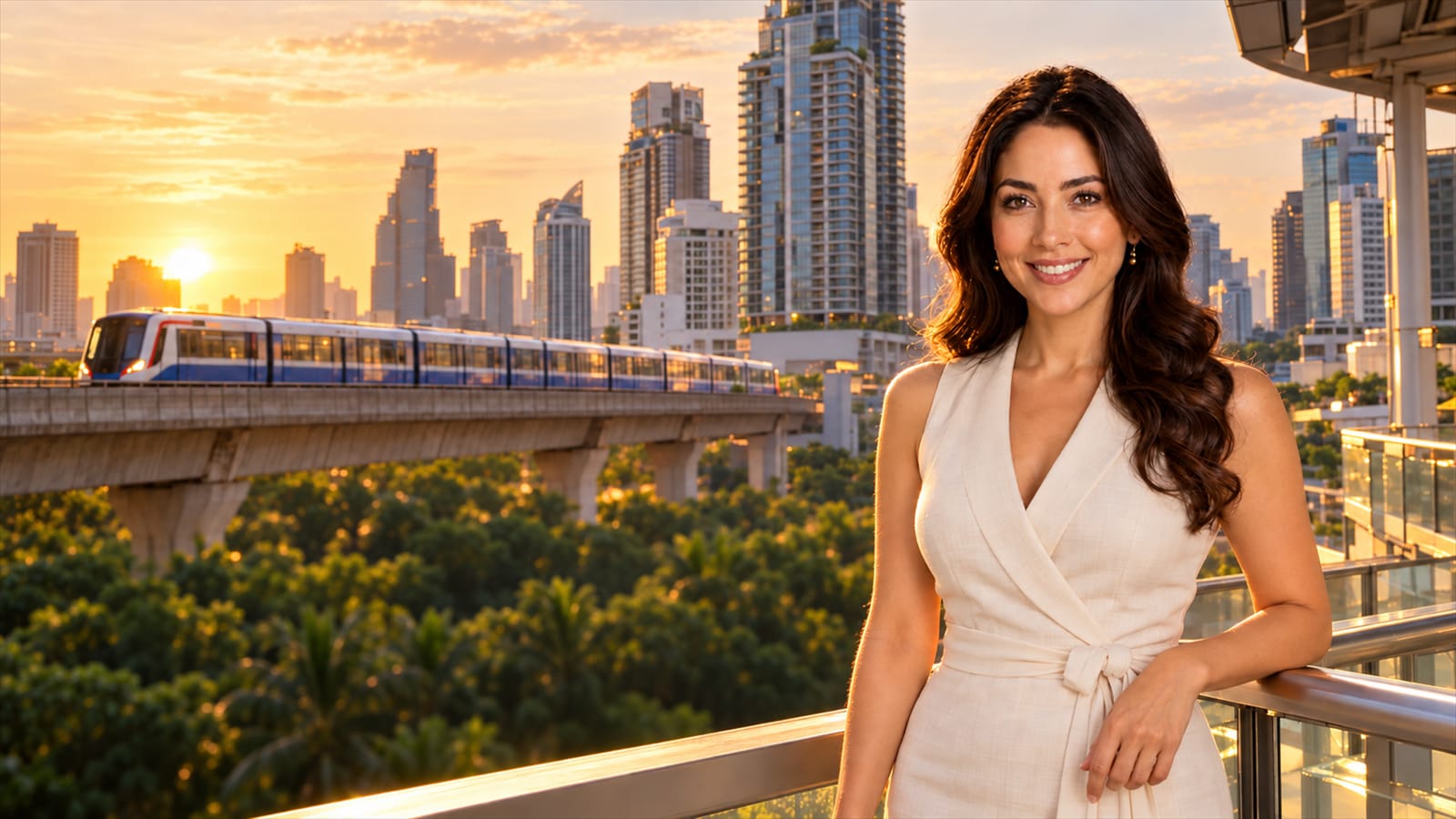
Property in Bangkok
Apartments and condominiums near the metro in the capital of Thailand
Apartments in Bangkok are chosen by the metro first: in a city with heavy traffic, a BTS or MRT station near home matters more than the view, and prices follow it. People buy an apartment in Bangkok to live and work in the capital or to let long term. You can rent for a month or longer.
This page covers the whole city: what an apartment costs, how districts differ and how a foreigner can buy or rent.
The figures below come from published listings. If they are zero, the city catalogue is still being filled, and we will find options on request.
The region in numbers
- Locations with listings: 0
- Developments: 0
- Listings: 0
- Developers: 0
- For rent: 0
About the region
Bangkok is the capital and business centre of Thailand, home to major companies, embassies, private hospitals and international schools. The city runs all year, so rental demand depends less on the tourist season than in Pattaya or Phuket.
The housing market is built around metro lines. High-rise condos with pools and gyms stand near central stations, and apartments get larger and cheaper further out. So look at the distance to the station as closely as at the building.
Where it is
Bangkok lies on the Chao Phraya River in central Thailand. It has two international airports, Suvarnabhumi and Don Mueang; the Airport Rail Link runs from Suvarnabhumi to the centre. The BTS and MRT connect the main districts, and boats run on the river.
Many residents keep a second home by the sea: Pattaya and Hua Hin are a few hours away, depending on the road and traffic.
Locations
Bangkok districts differ widely. Sukhumvit is the best known among foreigners: Asok and Nana are near business centres, Thonglor and Ekkamai are known for restaurants, Phra Khanong and On Nut are further along the line and usually more affordable. Silom and Sathorn are the business centre. Ratchada and Lat Phrao follow the MRT, with more local residents and usually lower prices. Ari is a calm area with cafés and greenery. Bang Na in the south-east is handy for Suvarnabhumi and the coast. The riverside is valued for its views, but without a nearby station check your commute first.
Bangkok is a separate administrative unit divided into khet districts. Listings often name an area after the nearest station, so check the exact address.
New developments
New condos in Bangkok are bought during construction on the developer's payment schedule. You get a choice of layouts and instalments, but you see the finished building only on completion. Look at what the developer has already completed and how it looks years later. Check permits, the payment schedule and the terms if handover is delayed.
Resale property
On the resale market you see the real condition, the neighbours and how the management works, and you can move in sooner. Older buildings often offer more space for the money, but check the lifts, parking, maintenance budget and distance to the station. If the unit is let, ask how long the tenant's contract runs.
Villas and houses
The capital's main format is the apartment. Houses and townhouses exist in estates on the outskirts, mostly for families with a car. A foreigner cannot hold land directly: a long-term lease or another lawful structure is used, so go through it before a deposit. If a house with a garden and pool is the priority, compare Pattaya and Hua Hin.
Property prices
What an apartment in Bangkok costs depends on the distance to the station, the district, the age of the building and the view. A unit next to a central station and the same size at the end of a line are different markets. Prices are in baht; other currencies are a guide and the total depends on the rate on payment day. To compare, work out the price per square metre and add the maintenance fee. The minimum price above comes from published listings.
Investment
Rental demand comes from office staff, foreign specialists and students, so closeness to stations and business districts matters most. We do not promise a yield in advance. Calculate for a specific apartment: the rent really paid in that building, minus maintenance, furniture, management and empty periods. Check whether the building allows short-term rentals, as many forbid them.
How to choose a location
Choose a district by purpose rather than fame. Before buying, live there for at least a week and make your commute at rush hour.
For work in the centre
Silom, Sathorn and Asok: offices close by and the metro within walking distance.
For getting to know the city
Sukhumvit: metro, shops, hospitals and cafés nearby. Easy without a car.
For a family
Areas near international schools and parks, and Bang Na, where apartments are larger.
On a budget
On Nut, Lat Phrao and areas further along the lines: a longer trip for a lower price.
For quiet
Ari: a calm pace, cafés and greenery near the centre.
How Sukhumvit works
Sukhumvit is not one district but a long road with the BTS line above it, and each station has its own character. Nana and Asok are closest to the business centre. At Asok the BTS meets the MRT, so you can travel easily in both directions. Bumrungrad Hospital and the Terminal 21 mall are nearby.
Phrom Phong is popular with families: it has Benjasiri Park, the EmQuartier and Emporium malls, and Samitivej Hospital not far away. A large Japanese community has long lived in these streets, so there are many Japanese restaurants and shops. Thonglor and Ekkamai stand out for restaurants, bars and expensive new buildings.
Further along are Phra Khanong, On Nut and Bang Chak. Apartments here are usually noticeably more affordable, and the ride to Asok is short if you live close to a station. People often choose these areas to stay on the Sukhumvit line and spend less.
Silom, Sathorn and the river
Silom and Sathorn are the business heart of the city: banks, office towers and embassies. Lumpini, the largest park in the centre, is next door. In the evening and at weekends some office streets go quiet, while many restaurants remain around Silom. The area suits those who work nearby and want to walk to the office or ride one or two stops.
The Riverside along the Chao Phraya is valued for its views and for larger apartments in high-rise buildings. The big ICONSIAM mall is here. Boats run on the river from Saphan Taksin station, and many residents reach the BTS that way. Before buying, check how long your commute will take: not every riverside building is close to a station.
Ari, Ratchada and Lat Phrao
Ari lies north of the centre on the BTS line. It has many small cafés and plenty of greenery, and Siam is a few stops away. People choose it for quiet without moving far from the centre.
Ratchada and Lat Phrao follow the MRT line. There are more local residents, lower prices, large malls and markets. These areas suit those who work in this part of the city or do not mind changing lines. When choosing, consider which way you travel every day: that decides whether the district works for you.
Bang Na and the east of the city
Bang Na is in the south-east, not far from Suvarnabhumi and the highway to Pattaya. This is convenient if you fly often or drive to the sea. Bangkok Patana international school is here, so families with children choose the area, and apartments and houses are usually larger than in the centre. The big Central Bangna and Mega Bangna shopping complexes are nearby.
There is also housing along the Airport Rail Link with a quick trip to the airport. It suits frequent flyers, but check the noise from roads and trains.
How to choose a building near the metro
"Near the metro" in a listing can mean anything. Walk from the front door to the station yourself and time it, ideally in the daytime heat and on a rainy evening. A few hundred metres in the shade and the same distance along a noisy road feel very different.
Compare buildings on one line rather than in one district. An apartment a few minutes from a station further from the centre often gives more space for the money than a building far from the station in a fashionable area. It is usually easier to find a buyer or tenant for it too.
See which line is nearby. BTS and MRT are separate systems with separate tickets, and changing at Asok, Silom or Mo Chit takes time. Find out whether there is a new construction site close by: building work outside your windows can last for years.
Living in Bangkok: what to consider
Bangkok has a hot and humid climate. The rainy season usually runs from May to October, and in heavy downpours some streets flood for a short time. So before buying, see what the street looks like after rain and ask neighbours whether water reaches the building entrance.
Air quality can be poor in the dry season, especially early in the year. If this matters to you, look at ventilation, windows and whether you can use an air purifier.
Healthcare is the easiest in the country here: the private hospitals Bumrungrad, Samitivej, BNH and Bangkok Hospital work with foreigners. There are many international schools, but they are spread across the city, so families choose the school first and then a home near it. The school run at rush hour can take longer than the map suggests.
What to check in the apartment
In a high-rise the lifts matter: how many serve each floor and how long the morning queue is. Check the orientation: west-facing windows get very hot by evening and raise air-conditioning bills. A high floor is further from noise, but check whether a new tower could go up in front of your windows.
Ask about the maintenance fee, the condition of the pool and gym, and the building rules on pets and letting. Compare several apartments in one building: the price of the same layout can vary noticeably with the floor, view and renovation.
Buying to let
Tenants in Bangkok usually care less about the view or design than about the commute. So a small apartment by a station near business districts, hospitals or universities lets more easily than a large one far from the metro. Find out how many apartments in this building and its neighbours are already for rent and at what price: if there are many offers, you will wait longer for a tenant.
Check real contracts, not listings: the advertised rent and the rent tenants actually pay often differ. Include maintenance, furniture, taxes and management if you live abroad. A management company will handle viewings and repairs, but its services must also go into the calculation.
Renting in Bangkok: what to look at
Renting is easier if you start with the commute rather than the building. First mark your work, school or client office, then find stations on that line, and only then choose an apartment. Before signing, photograph the condition of the furniture and appliances and attach the pictures to the contract: this makes it easier to get the deposit back when you leave.
Check the deposit, the notice period and the terms of early termination. Ask how electricity is charged, by the building tariff or by the utility bill, because this affects the monthly total. Electricity, water and internet are paid separately.
How a purchase works
First we define your purpose and budget, then show suitable buildings in person or on video. Once an apartment is chosen, we check the quota, the title, debts and the building budget. A reservation is then paid and a contract signed in Thai and English. The money comes to Thailand from abroad in foreign currency, the bank issues a confirming document and the building issues a debt-free letter. Ownership is transferred at the Land Department, and you receive the title in your name and the keys.
Buying and renting in Bangkok
A foreigner can buy an apartment in Bangkok in a registered condominium within the foreign quota: no more than 49% of the building's area. The money must come to Thailand from abroad in foreign currency, and the bank issues a document without which the Land Department will not register the sale. Before reserving, check the walking distance to the station in metres, the quota, the name on the title, debts to the management company, the building budget and transfer costs. Renting is easiest near the metro: contracts usually run a year, shorter stays cost more, and electricity, water and internet are separate. Contracts are in Thai and English, and only these have legal force. Your price is the same as from the seller or sales office: we charge nothing for finding a property or handling the process.
What to know before you buy
- Ownership: Freehold and Leasehold: How Foreigners Own Property in Thailand
- Ownership: Sap-Ing-Sith: a Property Right for Foreigners
- Entry & visas: Entering Thailand in 2026: 30-Day Visa Exemption and TDAC
Who you will work with
Realty 51 is an agency in Pattaya: we find the apartment, check the quota and documents and handle the deal through to registration at the Land Department — remotely too.
In Pattaya since 2011 · ★ 5.0 on Google · Airbnb Superhost · 4.71 · 560 reviews · No commission for buyers · Remote purchase · Languages: RU · EN · TH
 Arthithaya Chuchorkaew (K.Tan) — Founder · EN · TH
 Dmitry Korinchuk — Sales Executive · RU · EN
 Phatcharakorn Mookontha (K.Tangwha) — Sales Executive (Thai) · TH
Find an apartment in Bangkok
We will find apartments near the metro for your budget and purpose.
Frequently asked questions
Can a foreigner buy an apartment in Bangkok?
Yes, in a condominium within the foreign quota: no more than 49% of the building's area.
Can I buy a house or land?
A foreigner cannot hold land directly; a long-term lease or another lawful structure is used.
How much does an apartment in Bangkok cost?
It depends on the district and distance to the station. The catalogue minimum is shown above, and we will send a selection for your budget.
Which district is best to live in?
Sukhumvit to get to know the city, Silom and Sathorn for work in the centre, Ari for quiet, On Nut and Lat Phrao for a smaller budget.
Why does the metro matter so much?
Traffic makes trips long, so apartments near stations are valued more and are easier to let.
Can I rent in Bangkok for a month?
Yes, but there are fewer offers and the rate is higher than on a long-term contract.
What is the standard rental term?
Most often one year.
How much does it cost to rent in Bangkok?
It depends on the district, station and term. Tell us your budget and dates and we will show options.
What is paid separately when renting?
Usually electricity, water and internet.
Do I need a visa to rent?
The rental itself needs a passport; your length of stay is set by your visa or visa-free entry.
How do I get there from the airport?
The Airport Rail Link and taxis run from Suvarnabhumi to the centre. From Don Mueang people usually drive.
How does Bangkok differ from Pattaya?
It is a business capital with year-round demand, while Pattaya is a seaside resort.
Can I buy without coming?
Yes, we show the apartment on live video and handle the deal remotely.
What are the purchase costs?
Land Department transfer costs and building fees. We calculate the exact sum for a specific apartment.
Does the agency charge the buyer?
No, the buyer pays us nothing for finding a property or handling the process.
Where to go next
Property in Thailand: condos and new developments · Property in Pattaya · Property in Phuket · Property in Hua Hin