Jomtien District Guide: Living, Infrastructure, Transport
Jomtien is the Pattaya district south of Pratumnak Hill, along the beach of the same name, about 6 km long. It is calmer than the centre, full of seaside condominiums, and one of the most popular districts among foreigners — both for buying an apartment and for renting for a month or a year. Below: where Jomtien is, what the beach is like, how the district works, what apartments cost, and current listings for sale and rent.
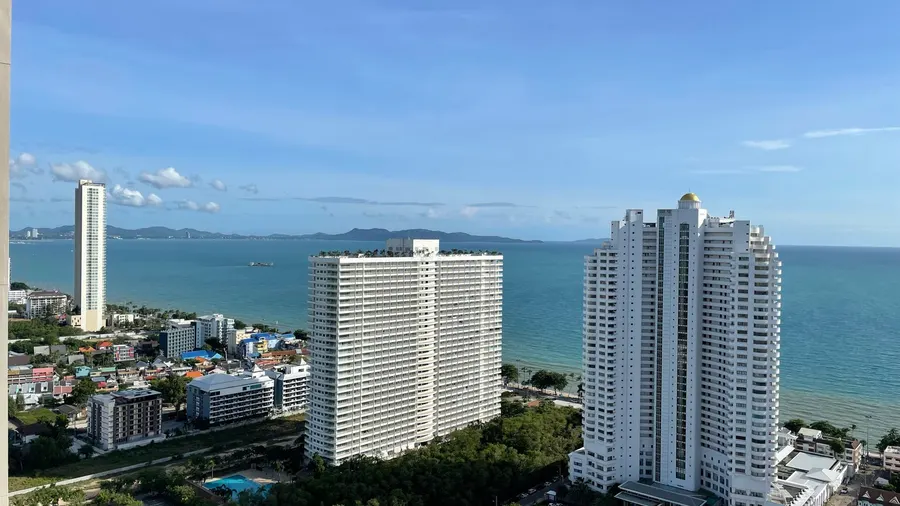
- Jomtien Beach — about 6 km — A long beach with a promenade, seaside cafés and a gentle entry into the sea. Calmer and cleaner than Pattaya's central beach; at weekends Thai families come here too.
- Infrastructure — Markets, supermarkets, cafés, international schools and clinics within the district; the shopping malls of central Pattaya are 10–15 minutes away.
- Condos by the sea — Most housing in Jomtien is condominiums: from budget buildings deeper in the district to new beachfront projects with sea views.
- Year-round rental — Jomtien is rented both by tourists for a month and by expats for a year, so apartments here rent out and resell well.
Jomtien on the map of Pattaya
Pattaya stretches along the Gulf of Siam from north to south. In the north are Naklua and Wongamat, in the middle Central and South Pattaya with Walking Street, and further south the road is blocked by green Pratumnak Hill. Right behind it Jomtien begins: a long straight beach line that runs south to the Na Jomtien district.
Administratively Jomtien is part of the City of Pattaya, although many people feel it as a separate resort town with its own rhythm. From here it is 10–15 minutes to central Pattaya by motorbike or taxi, about two hours to Bangkok by highway, less than an hour to U-Tapao Airport and roughly an hour and a half to two hours to Suvarnabhumi depending on traffic.
To understand the geography quickly, remember three roads running parallel to the sea:
- Jomtien Beach Road — the beachfront line with the promenade, cafés and sea-view condominiums.
- Jomtien Second Road — the second street parallel to the beach, with shops, restaurants, residential buildings and more affordable condos.
- Thappraya Road — the main artery linking Jomtien over Pratumnak Hill to South Pattaya; along it are shopping centres, banks, markets and many condominiums.
Across these lines run sois — numbered lanes that locals and taxi drivers use for orientation. When a listing says "Jomtien, Soi 5" or "at the start of Thappraya", it immediately tells you the distance to the sea and to the centre.
A detailed map of all the city's districts is in the article Pattaya Districts: Where to Live and Where to Buy.
Jomtien Beach
Jomtien Beach is the main reason people choose this district. It is roughly 6 km of uninterrupted sand — the longest beach in Pattaya. It is noticeably wider and calmer than the central beach: no crowds at the pier, no dense flow of boats near the shore, and a landscaped promenade for walking, running and cycling along the whole line.
How the beach is laid out:
- The northern part, by Pratumnak Hill — known as Dongtan Beach. Here there is a green park, shade from trees and the most "urban" atmosphere, with cafés and bars nearby.
- The central part — classic Jomtien: sunbeds with umbrellas, cafés by the water, water sports, and beachfront condominiums and hotels across the road.
- The southern part, closer to Na Jomtien — quieter and less crowded, with more new residential complexes and less tourist bustle.
The entry into the sea is gentle and the bottom is sandy. The water in the gulf is calm most of the year; in the monsoon season, roughly May to October, there can be waves and murky water, while in the dry season, November to April, the sea is usually smooth and clearer. More on the weather by month in the article Pattaya Weather.
At weekends and on holidays Thai families from Bangkok come here to relax — the beach gets livelier and street food vendors are out. On weekdays, especially in the morning, the beach is almost empty.
For an active holiday Jomtien has water sports: jet ski rental, banana boats, parasailing, and in the windy season windsurfing and kitesurfing schools. Those who come for a long time usually value something else — being able to walk along the promenade at sunset every day and swim in the sea without crossing the whole city.
What the district lives on
Jomtien is not just a beach. Behind the beachfront begins a full residential district where foreigners live for years, raise children, work remotely and run businesses.
Shops and markets
The district has chain supermarkets, convenience stores on every corner, pharmacies, banks and exchange offices. Fresh food is bought at local markets: morning markets with vegetables, fruit and seafood, and in the evenings night markets with street food and clothes. Pattaya's large shopping malls are in the city centre, 10–15 minutes from Jomtien.
Cafés and restaurants
Along Beach Road and the second line there are hundreds of cafés: Thai cuisine, seafood, European and Russian-speaking places, coffee shops for working on a laptop. Jomtien has long been popular with Russian speakers, so menus in Russian and Russian-speaking staff are not unusual here.
Healthcare
Jomtien has private clinics and dental practices, and pharmacies with pharmacists. Pattaya's large international hospitals are in the central and northern parts of the city — 15–20 minutes from Jomtien.
Schools and kindergartens
In and near the district there are kindergartens and schools, including English-language ones. Pattaya's large international schools are in other districts, 15–30 minutes away, and many run school buses. More about schools, fees and how a school shapes your choice of district in the article Schools in Pattaya.
Sport and leisure
Besides the beach there are fitness clubs, muay thai gyms, yoga studios and tennis courts in condominiums. Not far from Jomtien are the floating market, water parks and golf courses — many people choose the southern part of Pattaya precisely for them.
Transport and getting around
The most popular transport in Jomtien is a motorbike: 10–15 minutes to the centre, and parking at condos is usually free. Without a motorbike you can use:
- Songthaews (baht buses) — blue or white pickups with benches in the back that loop along Thappraya Road and Beach Road between Jomtien and South Pattaya. Cheap and no haggling: hop on, ride, press the bell.
- App taxis — Grab and Bolt work around the clock, and the price is known in advance.
- Walking — much of Jomtien is walkable, especially if you live within 5–10 minutes of the beach.
There are traffic jams on Thappraya Road at rush hour and at weekends, when holidaymakers from Bangkok arrive. From Jomtien it is easy to head south — to the beaches of Sattahip and Samae San and to U-Tapao Airport — without driving through the centre.
Living in Jomtien: pros and cons
Pros
- Pattaya's longest beach with a promenade for walking and sport.
- Calmer than the centre — no Walking Street nightlife under your windows, but bars and restaurants nearby.
- A wide choice of housing — from budget studios to sea-view apartments in new complexes.
- A strong rental market — apartments rent out and resell well.
- Easy access to the south — to Sattahip beaches, water parks, golf courses and U-Tapao Airport.
- A large international community — services, cafés and specialists; it is easier to settle in during the first months.
Cons
- Dense beachfront development — the first line has many high-rises, and in some units the view is blocked by a neighbouring building. The view should be checked on site or by video from the specific floor.
- Construction — the beachfront is being actively built up, and it can be noisy during the day near new projects.
- Traffic on Thappraya Road at rush hour and at weekends.
- Seasonal sea — in the rainy season the water can be murky and there is more seaweed on the beach.
- No malls in the district — for big shopping you go to the centre, though it is only 10–15 minutes.
Jomtien or neighbouring districts
Jomtien or Pratumnak
Pratumnak is a green hill between the centre and Jomtien. It is quieter, with fewer buildings, more trees and a few small secluded beaches. Housing on Pratumnak is on average more expensive and the choice of projects smaller. Jomtien offers a long beach, more condos and a choice for any budget, and is livelier. If quiet and prestige matter, look at Pratumnak; if the beach, choice and rental, Jomtien. More on the district page Pratumnak.
Jomtien or central Pattaya
Central Pattaya means shopping malls, nightlife and everything within walking distance — but also noise, crowds and a short city beach. Jomtien is calmer and greener, and the centre is just 10–15 minutes away. Many who first rented in the centre move to Jomtien after a season. More: Central Pattaya.
Jomtien or Na Jomtien
Na Jomtien is the continuation of the coast to the south. It is more spacious, with more large new complexes and a resort atmosphere, but less urban infrastructure and further from the centre. Jomtien sits between resort and city. More: Na Jomtien.
Parts of Jomtien: where exactly to look for an apartment
Jomtien only looks uniform on the map. In reality the district has several zones with different atmospheres, prices and tenants. Understanding the difference saves months of searching.
The start of Jomtien by Pratumnak Hill
The northern edge of the district, where Thappraya Road comes down the hill to the sea and the beach begins at Dongtan park. This is the most "urban" part of Jomtien: closest to central Pattaya, with Thappraya's shopping streets, banks, cafés and gyms nearby. The beach here is shady, with trees along the shore. Apartments in this zone suit those who want to live by the sea but often go to the centre for work or errands.
Central Jomtien along Beach Road
The middle of the beach line is classic resort Jomtien. Along the road are beachfront condominiums, hotels and sea-view cafés, with sunbeds and water sports across the road. Demand for short-term rental is highest here: tourists want to stay opposite the beach. For a buyer this zone is attractive for its sea views and liquidity, but it also costs more than the rest.
The second line and Jomtien Second Road
A few minutes' walk from the beach begins the quiet residential part. Buildings are lower, streets quieter, with more local cafés, laundries and mini-marts. Second-line condominiums often stand on large plots with gardens and pools, and the price per square metre is noticeably lower than on the first line. This is the favourite zone of long-term tenants and those who live in Thailand year-round: five minutes to the sea without paying for the view.
Deeper in the district and Thappraya Road
Closer to Sukhumvit and along Thappraya Road there is dense urban development, markets, neighbourhood shopping centres, schools and many residential complexes of different classes. The beach is 10–15 minutes' walk or a couple of minutes by motorbike. This is the most affordable housing in Jomtien, and new projects priced below the beachfront often appear here.
South Jomtien
Closer to the border with Na Jomtien the beach becomes less crowded and the buildings newer. There are many large modern complexes with pools and gardens, fewer tourists and more people who live by the sea permanently. It is further to central Pattaya, but closer to the southern beaches, water parks and U-Tapao Airport.
High and low season in Jomtien
Jomtien's rhythm depends strongly on the time of year, and both tenants and buyers should take this into account.
High season — roughly November to March. Dry, warm and the sea is calm. Tourists from Europe, Russia and other countries come to Jomtien, and the beach and cafés are busy. Short-term rental prices peak and the best sea-view units are booked months ahead. For an owner renting by the night or month, this is the main income period.
Hot season — April and May. The hottest months of the year; in mid-April comes the Thai New Year, Songkran, with mass water festivities across Pattaya, including Jomtien Beach Road. After the festival there are fewer tourists.
Rainy season — roughly June to October. Rain is usually short and heavy, more often in the afternoon or at night; there are still plenty of sunny hours. Fewer tourists, cheaper rent, an empty beach. For those who live in Jomtien permanently it is a quiet time when the district belongs to residents.
For a buyer the conclusion is simple: if the apartment is bought to rent out, income should be calculated with seasonality in mind, not as the high-season rate multiplied by twelve months.
What it costs to live in Jomtien
Living costs in Jomtien consist of several items. Exact amounts depend on lifestyle, so here is what the budget consists of and what affects it.
- Housing. The main expense. A studio deeper in the district and a sea-view apartment on the first line differ in price several times over.
- Utilities. Electricity is the biggest part of the bill because of air conditioning; water is inexpensive. In condos electricity is sometimes charged at the building's rate, which is higher than the state tariff — worth checking before moving in.
- Building maintenance. If you own the unit — a monthly or annual fee for common areas, the pool, security and cleaning, plus a one-off sinking fund payment on purchase.
- Food. Thai street food and local cafés are inexpensive; European restaurants and imported products in supermarkets cost noticeably more.
- Transport. A rented or owned motorbike, fuel and sometimes taxis. Songthaews are the cheapest way to travel between Jomtien and the centre.
- Phone and internet. Mobile service and home fibre internet in Thailand are inexpensive and fast.
- Healthcare and insurance. Private clinics are affordable, but for serious cases it is better to have health insurance.
More about living in Pattaya while working remotely in the article Remote Work in Pattaya.
Jomtien for different goals
For living year-round
Jomtien is one of the most comfortable districts of Pattaya for permanent living: the sea is close, everything you need is in the district, the rhythm is calm and the international community is large. Many choose the second line — quieter and cheaper, with the beach five minutes' walk away.
For remote work
Fast internet, coffee shops, coworking spaces in Pattaya and apartments with a separate workspace make Jomtien convenient for remote work. For a long stay, think about a visa in advance — for example the long-term DTV visa. Entry rules are covered in the article Thailand Entry Rules.
For families with children
A calm beach with a gentle entry, kindergartens and schools nearby, large condominiums with children's pools and playgrounds. International schools are 15–30 minutes away, and many run school buses.
For rental investment
Jomtien is one of the most rented districts of Pattaya. When calculating yield, count net income: subtract from annual rent the empty months of the low season, maintenance fees, management, repairs and furniture, and taxes. Developer promises of guaranteed income are best checked against real rents in that and neighbouring buildings.
Jomtien in facts
- A district in the south of Pattaya, between Pratumnak Hill and Na Jomtien.
- Jomtien Beach — about 6 km, the longest in Pattaya.
- To central Pattaya — 10–15 minutes by motorbike or taxi.
- To Bangkok — about two hours by highway.
- The main housing type is condominiums: from budget studios to sea-view apartments in new projects.
- One of Pattaya's main districts for foreigners buying apartments and for rentals.
The Jomtien promenade: a day by the sea
The promenade is the heart of the district. In the morning, before the heat, people run, cycle and walk their dogs here; outdoor exercise equipment stands along the shore. In the daytime life moves under the beach umbrellas and into cool cafés across the road. At sunset the promenade fills up again: the sun sets right into the sea, and this is one of the best places in Pattaya to watch the sunset every day, not just on holiday.
In the evening seafood restaurants open along Beach Road, street food vendors are out, and at weekends night markets with food, clothes and souvenirs take place in different parts of the district. Yet Jomtien does not turn into a nightlife zone like Walking Street in South Pattaya: there are bars, but they are for a quiet evening rather than a loud night until morning. That is exactly what people who live here permanently value.
Safety and order
Jomtien is considered one of the calm districts of Pattaya. The streets along the beach are well lit, people walk the promenade until late at night, and lifeguards and tourist police work on the beach. As in any resort, follow the usual rules: don't leave belongings unattended on the beach, ride a motorbike carefully and wear a helmet, and check the terms of water-sports rentals before you go.
Jomtien condominiums usually have 24-hour security, key-card access and CCTV in common areas. This is one of the reasons foreigners choose condos rather than houses: you can safely leave the apartment for several months when you go home.
What to see near Jomtien
Jomtien is a convenient base for trips along the southern coast:
- Pattaya Floating Market — not far from Jomtien, with stalls on the water, Thai food and crafts.
- Water parks — several large water parks lie south of Jomtien, 15–30 minutes' drive away.
- Sattahip and Samae San beaches — quiet beaches with clear water an hour's drive south.
- Golf courses — there are dozens around Pattaya, many closer to Jomtien than to the centre.
- Koh Larn island — ferries and speedboats leave from Pattaya; the island is about half an hour by sea.
- The Pratumnak Hill viewpoint — a few minutes from northern Jomtien, with views of the bay and the city.
Jomtien and the climate: what matters for an apartment
Living by the sea in the tropics affects which apartment to choose:
- Humidity. Humidity is high in the rainy season, so the apartment needs airing and the air conditioning switched on if you are away for long — otherwise mould appears. The management company can check the unit in your absence.
- Sea air. On the first line salt wears out metal parts, appliances and air conditioners faster. It is a normal price for a sea view and worth including in your costs.
- Sun. West-facing units get the sunset and strong afternoon sun — curtains and good air conditioners are essential.
International Jomtien
Jomtien has long been one of the centres of expat life in Pattaya, including a large Russian-speaking community. Many families live here year-round, retirees spend the whole winter in the district, and remote workers settle here. For a newcomer this makes the first months noticeably easier: finding a doctor, lawyer, air-conditioning technician or tutor who speaks your language is easier here than in other districts.
Cafés and shops often have menus and signs in several languages, and condominiums have international neighbours and residents' chats where everyday issues are solved. Jomtien remains an international district: Europeans, Thais who moved from Bangkok and families from neighbouring Asian countries live side by side. For those planning to rent out an apartment, this is a plus: rental demand comes from several markets at once, not just one country.
Jomtien for those who spend the winter in Thailand
Many buy an apartment in Jomtien to live here from November to March and rent it out or keep it closed the rest of the time. For this scenario it is important to:
- choose a building with a good management company that will look after the unit in the owner's absence;
- agree in advance on airing and running the air conditioning in the rainy season to prevent damp;
- decide whether the unit will be rented out in the summer months — and whether such rental is allowed in the building;
- keep spare furniture and appliances for your return, and valuables in a lockable cupboard.
This format is convenient because in winter you live by the sea in a warm climate, and in summer the apartment can earn income instead of standing empty.
How Jomtien is changing
Jomtien's beachfront has changed noticeably in recent years: old low-rise buildings and hotels are gradually giving way to new high-rise condominiums with rooftop pools and hotel-level service. The promenade is being improved, and new cafés and coworking spaces are opening. At the same time density is growing, so the view from a specific apartment matters more than ever — it should be checked against plots where construction is still possible.
For a buyer this means two things. First, the choice of new projects in Jomtien is large, and off-plan you can find better terms than on the completed market. Second, older buildings in a good location do not lose demand: many value large floor areas and established grounds with gardens that new projects no longer have.
Other districts of Pattaya
Na Jomtien · Pratumnak · North Pattaya · Central Pattaya · Huay Yai · East Pattaya · South Pattaya
FAQ
Where is Jomtien in Pattaya?
In the south of Pattaya, beyond Pratumnak Hill: from Pratumnak along Jomtien Beach to Na Jomtien. Central Pattaya is 10–15 minutes away by motorbike or taxi.
What is the beach like in Jomtien?
Jomtien Beach is about 6 km of sandy shore with a promenade and cafés, the longest in Pattaya. It is wider and calmer than the central beach, with a gentle entry into the sea.
How is Jomtien different from central Pattaya?
Jomtien is calmer and greener: a long beach with a promenade instead of Walking Street nightlife. The centre is still 10–15 minutes away by motorbike, and prices per square metre are usually lower.
Jomtien or Pratumnak — which to choose?
Pratumnak is a quiet green hill between the centre and Jomtien; housing there is on average more expensive and there are fewer projects. Jomtien has a long beach, more condos, choice for any budget and livelier surroundings.
How do I get from Jomtien to central Pattaya?
By motorbike or Grab/Bolt taxi — 10–15 minutes; by songthaew (baht bus) along Thappraya Road — cheaper but slower.
When is the sea best in Jomtien?
In the dry season, roughly November to April: the sea is calmer and clearer. In the rainy season there can be waves and murky water.
Is it safe to live in Jomtien?
Yes, Jomtien is considered one of the calm districts of Pattaya: a lit promenade, tourist police, and in condominiums security and key-card access.
Where is it cheaper to live in Jomtien?
On the second line and deeper in the district along Thappraya Road: 5–15 minutes to the beach, with noticeably lower prices per square metre and rents than the first line.
Is there nightlife in Jomtien?
There are bars and restaurants for a quiet evening and night markets at weekends. The loud nightlife of Walking Street is in South Pattaya, 10–15 minutes away.
Is Jomtien suitable for families with children?
Yes: a calm beach with a gentle entry, kindergartens and schools nearby, condominiums with children's pools. International schools are 15–30 minutes away.
Condos for sale — Jomtien (63) · Condos for rent — Jomtien (3)
Фото / Photo: Slyronit, Wikimedia Commons, CC BY-SA 4.0 · Meow2021, Wikimedia Commons, CC BY-SA 4.0 · Niceley, Wikimedia Commons, CC BY-SA 4.0


