
Buy a House in East Pattaya
East Pattaya is the green district beyond Sukhumvit Road, around Mapprachan Lake and the fairways of Siam Country Club. People come here not for a sea-view apartment but for a house on its own plot in a quiet gated community: space, a garden, a pool and international schools nearby, with the beaches and shopping centres 15–25 minutes away by car. Below — where East Pattaya is, how the district works, what communities and houses it has, how a foreigner can own a house, and current listings for sale.
Listings in this district
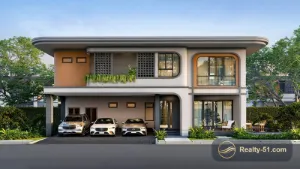 4 Bedroom House SUNLIGHT 350 m² in Spectra Residence — 22,400,000 ฿ (≈ $664,000)
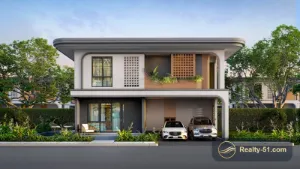 4 Bedroom House MOONLIGHT 240 m² in Spectra Residence — 13,900,000 ฿ (≈ $412,000)
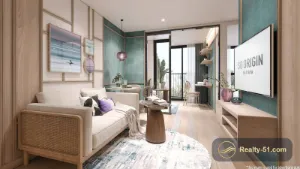 1 Bedroom Plus 35 m² Pool View in SO Origin Pattaya — 3,240,000 ฿ (≈ $96,100)
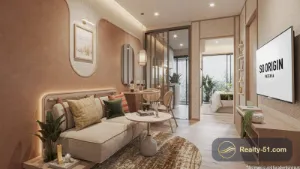 1 Bedroom 27 m² in SO Origin Pattaya — 1,840,000 ฿ (≈ $54,600)
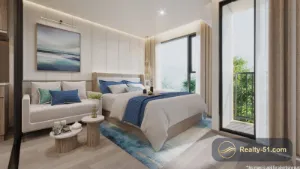 Studio 25 m² in SO Origin Pattaya — 1,840,000 ฿ (≈ $54,600)
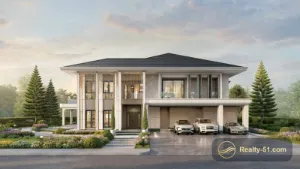 5 Bedroom House 704 m² in Windemere — 35,400,000 ฿ (≈ $1,050,000)
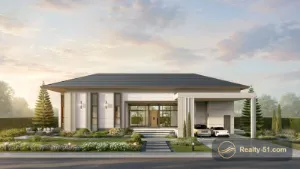 4 Bedroom Villa 552 m² in Windemere — 40,900,000 ฿ (≈ $1,210,000)
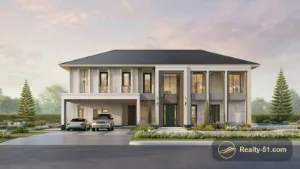 4 Bedroom House 428 m² in Windemere — 22,500,000 ฿ (≈ $667,000)
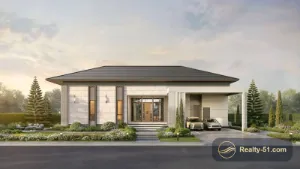 3 Bedroom Villa 399 m² in Windemere — 25,500,000 ฿ (≈ $756,000)
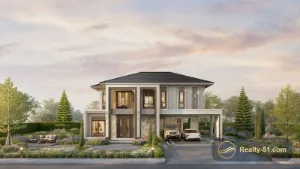 4 Bedroom House 329 m² in Windemere — 15,000,000 ฿ (≈ $445,000)
Prices by apartment type
- Studio — from 1,840,000 ฿ (≈ $54,600) (1)
- 1 bedroom — from 1,840,000 ฿ (≈ $54,600) (2)
- 3+ bedrooms & penthouses — from 13,900,000 ฿ (≈ $412,000) (7)
Prices in US dollars are indicative and converted at the current rate — deals are settled in Thai baht. You can switch the currency in the header: USD, EUR, RUB, CNY.
Projects in this district

Why this district
A house instead of an apartment
The district is built up with communities of private houses: each has its own plot, its own entrance and its own garden. There are few condominiums here, and that is the main difference between East Pattaya and the coastal districts.
Mapprachan Lake
The reservoir, with paths for running and cycling, is the heart of the district. Around it are restaurants and cafés, and in the evening the people walking here are residents of nearby communities, not tourists.
Schools and golf
Several international schools are located around Mapprachan, among them Regents and Rugby School Thailand, with the Siam Country Club courses close by. That is why families move here, and for the long term.
Demand for long-term rentals
Houses here are rented for a year or longer: families with children at international schools and professionals working in the region on contracts. The district lives on owners and long-term tenants, not on the seasonal flow.
East Pattaya on the map
Pattaya stretches along the Gulf of Thailand from north to south: Naklua and Wongamat, Central and South Pattaya, Pratumnak Hill, Jomtien and Na Jomtien. All of these districts lie between the sea and Sukhumvit Road — the main highway that runs parallel to the coast a few kilometres inland.
Everything that starts east of Sukhumvit is called East Pattaya. It is not a single neighbourhood but a large area inland from the sea: hills, fields, orchards, lakes and communities of private houses. The centre of the district is Mapprachan Reservoir, around which the best-known communities are being built. Administratively these lands belong to the Nong Prue and Pong subdistricts of Bang Lamung, Chonburi province.
To find your bearings quickly, remember a few landmarks:
- Sukhumvit Road — the western edge of the district. Along it are hypermarkets, car dealerships, hospitals and the turn-offs to the roads leading inland.
- Mapprachan Lake — the heart of the district, surrounded by communities, cafés and walking paths.
- Siam Country Club — a golf club with several courses north-east of central Pattaya. There is plenty of housing around it too.
- Motorway No. 7 — the toll highway to Bangkok and Suvarnabhumi Airport. Its exits are on the edge of East Pattaya, and this is one of the district's main advantages.
Distances worth knowing:
- to the beaches of Pattaya and Jomtien — 15–25 minutes by car;
- to the Central Pattaya and Terminal 21 shopping centres — about 20 minutes;
- to the district's international schools — 5–15 minutes;
- to U-Tapao Airport — about 45 minutes;
- to Suvarnabhumi Airport — about 1 hour 20 minutes via the Motorway;
- to central Bangkok — about two hours.
The main thing to understand about the district straight away: in East Pattaya people live by car. That is not a drawback but a condition. People move here for the space and quiet that are almost impossible to find in beachside Pattaya.
Mapprachan Lake: the heart of the district
Mapprachan is a reservoir that supplies part of Pattaya's water. A road with running and cycling paths circles it, and in the morning and evening residents of the nearby communities meet here: running, cycling, walking with children and dogs. There are few tourists, and the atmosphere feels more like the countryside than a resort.
On the shores and close to the lake there are cafés and restaurants with water views, small farms, riding clubs and outdoor activity grounds. At weekends people come from central Pattaya to sit by the water, but on weekdays it is quiet.
For a buyer, Mapprachan matters for three reasons:
- Nature. Water, hills and greenery nearby are rare in a resort city where most districts are densely built.
- Air and quiet. There is no nightlife and no heavy traffic, and the evenings are noticeably more pleasant than next to the highway.
- Steady demand. Lakeside houses are valued by people who live in Thailand all year round, so the district depends less on the tourist season.
What to see and do
East Pattaya is not a tourist district, but free time here is spent well:
- Golf. The Siam Country Club courses are among the best known in the country and host international tournaments. There are other clubs around Pattaya as well — most of them 20–40 minutes away.
- Pattaya Floating Market — on Sukhumvit, at the edge of the district: stalls on the water, cafés and souvenirs. A good place to show Pattaya to guests.
- Cycling and running around Mapprachan — the residents' main sport.
- Riding clubs and farms — for children and anyone who likes trips into nature.
- Beaches — 15–25 minutes away: Jomtien, Pratumnak, Wongamat. Many residents go to the sea at weekends and swim in their own pool on weekdays.
Everyday life in the district
Shops and markets
Large hypermarkets and DIY stores stand along Sukhumvit — 5–15 minutes from most communities. Inside the district there are small supermarkets, roadside shops and markets selling fruit, vegetables and ready meals. For big shopping and malls, residents drive to Central Pattaya.
Cafés and restaurants
Around Mapprachan Lake and on the roads leading to it there are Thai and European restaurants, lakeside cafés and bakeries. There are fewer of them than on the coast, but many cater to residents rather than tourists and are open all year.
Healthcare
Pattaya's major private hospitals are on Sukhumvit and in the central part of the city — 10–25 minutes by car from East Pattaya. The district has clinics and pharmacies. For families this is an important point when choosing a community: check in advance how long it takes to reach a hospital at night.
Schools and kindergartens
Schools are largely what made East Pattaya a family district. Within a few kilometres of Mapprachan there are international schools, among them Regents International School Pattaya and Rugby School Thailand, as well as English-language kindergartens. The school run takes 5–15 minutes, compared with 25–40 minutes from the coastal districts in the morning rush hour.
Sport and leisure
Golf, the paths around Mapprachan, fitness clubs, tennis courts, riding clubs, and clubhouses with pools and gyms inside the communities. There is no nightlife in the district — for that people go to the coast.
Transport and getting around
In East Pattaya you need your own car. Songthaews — the blue pick-ups that carry passengers around Pattaya — hardly run here, and distances are not walkable. Grab and Bolt taxis help, but they are not enough for daily life.
Things to keep in mind:
- Two cars per family is normal: one for the school run, the other for work and errands. Most houses are designed for two or three cars.
- Rush hour on Sukhumvit — in the morning and evening the junctions can be congested. If the school or workplace is on the same side of the highway as the house, the journey is much shorter.
- Motorway No. 7 is close — getting to Bangkok and Suvarnabhumi Airport is easier from East Pattaya than from the beach districts, because you do not have to cross the whole city.
- Pattaya railway station lies east of Sukhumvit — trains to Bangkok are infrequent, but it is an option for trips without a car.
Property in East Pattaya
What kind of housing is for sale
East Pattaya is Pattaya's main district for buying a house. The main types of property:
- Houses in gated communities — with security at the entrance, shared grounds, a clubhouse and community rules. The most popular option.
- Pool villas — larger houses on bigger plots, with a private pool and garden.
- Townhouses — terraced houses with shared walls, an affordable way to live in a house rather than an apartment.
- Detached houses outside communities — on their own land, without community rules or security.
- Condominiums — few of them, mainly low-rise buildings closer to Sukhumvit.
- Land plots — for building your own house.
Which developments are in East Pattaya
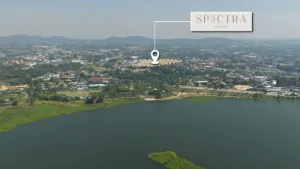
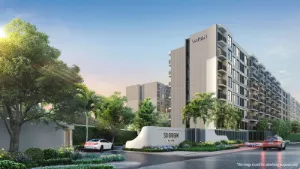
Our catalogue includes the Windemere community by Mapprachan Lake and Spectra Residence, as well as the SO Origin Pattaya condominium near Sukhumvit. Cards for all developments with descriptions, photos and prices are in the developments block on this page.
What affects the price of a house
A house is priced differently from an apartment. The key factors:
- Plot size — often more important than the size of the house itself. Plots are measured in the Thai unit «square wah» (1 square wah = 4 m²) or in square metres.
- House size and number of bedrooms — communities sell several house models, and the price depends above all on the model.
- Pool — whether it is included in the price or only space for one is provided.
- The community — security, clubhouse, quality of the shared grounds and the developer's reputation.
- Location — by the lake, near the golf courses or closer to Sukhumvit.
- Completion — a house under construction is usually cheaper than a finished one but means waiting.
- Furniture and finishes — whether furniture, kitchen and air conditioners are included.
Buying a house in East Pattaya
East Pattaya is a district people come to for a specific way of life: their own house, their own garden, quiet and schools nearby. Before buying, it is worth honestly asking yourself whether it suits you.
Who East Pattaya suits
- Families with children who attend or will attend international schools.
- People moving to Thailand for the long term who want to live in a house, not an apartment.
- Dog and pet owners — pets are harder in condominiums.
- Lovers of golf, cycling and quiet country life.
- Remote workers who want a separate study and space.
- Investors who count on long-term rentals to families.
Who should look at other districts
- Those who want to walk to the beach — Jomtien, Na Jomtien or Wongamat are better.
- Those who do not drive and do not plan to.
- Those buying for short-term rentals to tourists — in many communities these are prohibited by the rules.
- Those who want full freehold ownership in their own name without any structures — that is only possible with a condominium apartment.
New or completed house
New communities sell houses during construction: the price is lower, payment is in instalments, and you can choose the plot and the model. The downside is the wait and the need to trust the developer. A completed house can be viewed, inspected and moved into straight away, but the choice of models and plots in finished communities is limited. In both cases the land title, building permit and community rules must be checked before the deposit.
How a foreigner can own a house
This is the key question when buying a house in Thailand. A foreigner can own a condominium apartment freehold within the foreign quota. A house is more complicated: the building itself can be registered to a foreigner, but the land cannot. That is why legal structures are used:
- Long-term land lease (leasehold) — the land is leased for 30 years with registration at the Land Department, usually with a renewal clause. The house belongs to the buyer.
- Superficies — a registered right to own a building on someone else's land for the term of the lease.
- A Thai company — the land is owned by a company in which a foreigner may hold a share within the law. This structure requires careful legal support and annual reporting.
- Registration in the name of a Thai spouse — for families where one spouse is a Thai citizen.
Which structure a particular community offers depends on the developer. It has to be worked out before the deposit, not after. We show you the community's documents and explain exactly what you receive.
Land and plot: what a house buyer needs to know
An apartment buyer thinks in square metres; a house buyer thinks first of all about the plot. A few terms you will meet in every price list and contract:
- Square wah — a Thai unit of area, 1 square wah = 4 m². Plot sizes in communities are almost always given this way, and the maintenance fee is often calculated from it.
- Ngan and rai — larger units: 1 ngan = 100 square wah = 400 m², 1 rai = 4 ngan = 1,600 m². The land of a whole community is measured in rai.
- Chanote — the land title deed with exact boundaries tied to coordinates. It is the most reliable form of land title, and it is the one to buy a house with.
- Land allocation licence — the permit under which a developer divides a large piece of land into individual house plots. Without it a community cannot legally be sold plot by plot.
- Servitude and community roads — internal roads usually belong to the community as common property; it is important that your plot has legal access to a public road.
Before a purchase we match the chanote number in the contract with the developer's document, check the plot for encumbrances, and see whether the boundaries on site match those in the document. If the land of the whole community is mortgaged to a bank to finance construction, the contract should describe how the plot is released from the mortgage when the house is handed over.
An apartment in East Pattaya
There are few condominiums in the district, and they differ from the coastal ones: low-rise buildings with pools and green grounds, closer to Sukhumvit. An apartment here is a way to live in a calm district, close to schools and the road to Bangkok, for less money than by the sea. Such apartments are bought to live in and to let long-term to people working in the region. A foreigner owns the apartment freehold within the foreign quota — up to 49 % of the building's floor area.
Renting a house in East Pattaya
Rentals in the district are mostly long-term — for a year or longer. Houses are rented by families who moved to Pattaya for the schools and by professionals working at factories and companies on Thailand's Eastern Seaboard.
What options there are
- Houses in gated communities — the most in demand.
- Pool villas — for families who value space and privacy.
- Townhouses — an affordable way to live in a house.
- Apartments in low-rise condominiums.
Rental terms
Contracts are usually for 6–12 months, the deposit is two months' rent, and payment is monthly. Electricity and water are paid separately by meter. Garden and pool care is sometimes included in the rent and sometimes not — check the contract.
Living in East Pattaya: pros and cons
Pros
- Your own house with a plot, a garden and space for a pool.
- Quiet, greenery, Mapprachan Lake nearby.
- International schools minutes away.
- Gated communities with security and shared grounds.
- Easy access to the Motorway to Bangkok and the airport.
- Steady demand for long-term rentals.
- More space for your money than by the sea.
Cons
- Life without a car is difficult.
- The beach is 15–25 minutes away.
- Fewer restaurants and entertainment than on the coast.
- Land ownership for a foreigner is more complex than for an apartment.
- House, garden and pool care mean ongoing costs and effort.
- Short-term rentals are prohibited in many communities.
East Pattaya or neighbouring districts
East Pattaya or Huay Yai
Both districts are for buying a house. Huay Yai lies further south, beyond Jomtien and Na Jomtien: it has more space and cheaper land, but it is further from the centre and the schools. East Pattaya is closer to the city, the schools and the Motorway, and its infrastructure is denser.
East Pattaya or Jomtien
Jomtien means an apartment by the sea, the beach on foot, restaurants and a promenade. East Pattaya means a house with a plot in quiet surroundings, but you have to drive to the sea. Choosing between them is choosing between resort life and country life.
East Pattaya or Central Pattaya
The centre is for those who want to live in the thick of the city: malls, restaurants and nightlife close by. East Pattaya is for those who want a break from all that but can still reach the centre in 20 minutes.
Parts of East Pattaya: where exactly to look for a house
Around Mapprachan Lake
The most prestigious part of the district: communities with water views or a few minutes from the lake, walking paths, cafés. The Windemere community is located here.
Near Siam Country Club
Houses next to the golf courses and surrounded by greenery. The choice of golfers and of those who value views of the hills.
Pong and the roads to the Motorway
The closest to the exit for Bangkok. Convenient for those who often travel to the capital or to Suvarnabhumi Airport.
Near Sukhumvit
Closer to hypermarkets, hospitals and the city. There are more townhouses and low-rise condominiums here, and the drive to the beach is shorter.
Khao Talo and the roads inland
Many older communities and detached houses — a good place to look for a completed house on the resale market.
High and low season in East Pattaya
On the coast, life changes noticeably from season to season: in winter hotels and restaurants are full, in summer it is quieter. In East Pattaya the difference is smaller: the district lives on people who work, study and live here all year.
- November — February — the dry, cooler season, the best time for golf, walks around Mapprachan and house viewings.
- March — May — the hot season. Houses with good insulation, shade in the garden and a pool are valued.
- June — October — the rainy season. Short downpours, greenery, fresh air. A good time to check a house for drainage and leaks.
The cost of living in East Pattaya
Living in a house costs more than living in an apartment, mainly because of the floor area and the pool. The main expenses:
- electricity — the largest item because of air conditioning and the pool pump;
- water — by meter, usually inexpensive;
- the community fee for maintaining the shared grounds and security;
- garden and pool care;
- fuel for the car;
- internet and mobile service;
- groceries — at markets and hypermarkets on Sukhumvit.
On the other hand, everyday small things are cheaper in East Pattaya: local cafés and markets cater to residents, not tourists.
A house owner's costs
Besides the purchase price, a house owner pays:
- Community maintenance fee — for security, cleaning of the shared grounds, lighting and the clubhouse. It is usually calculated from the plot size in square wah, and new communities often collect it in advance for several years.
- Community fund — a one-off payment at handover.
- Land and building tax — annual, small for residential property.
- Pool maintenance — chemicals, cleaning, pump repairs.
- Garden — a gardener once a week or more often.
- Repairs — roof, facade painting, air conditioners. In a tropical climate a house needs regular attention.
- Registration costs — Land Department fees and taxes; who pays them is set by the contract.
Buying a house step by step
- Selection. You tell us how many bedrooms you need, your budget, whether you need a pool, where the school and work are. We suggest communities and houses.
- Viewing. In person or online by video call: the house, the plot, the community, the drive to school and shops.
- Document check. Land title (chanote), building permit, land allocation licence for the community, community rules.
- Choosing the ownership structure. Land lease, superficies, company — decided before the deposit.
- Reservation. A small deposit secures the house for you.
- Contract. The sale and purchase agreement and, if needed, the land lease agreement. Checked by a lawyer.
- Payment. For a house under construction — in instalments on the developer's schedule; for a completed house — on the day of registration.
- Registration at the Land Department: transfer of ownership of the house and registration of the lease or superficies on the land.
- Handover. Inspection of the house against a checklist, transfer of the meters, introduction to the community's management company.
How to choose a house in East Pattaya: a checklist
- How long does it take to reach school, work and hospital in rush hour?
- What is the land title and in whose name is it registered?
- What ownership structure does the community offer foreigners?
- Is the pool included in the price, or only space for one?
- How much is the community fee and for how many years is it collected in advance?
- Are short-term rentals allowed, if you need them?
- What is next to the community: roads, industry, landfill, construction sites?
- Which way does the house face — where is the shade during the day?
- How does the plot drain water in the rainy season?
- Is there a backup source of water and electricity?
- What is included in the price: kitchen, furniture, air conditioners, fencing?
- Who manages the community and for how long?
East Pattaya for different goals
For living all year round
The best choice for those moving to Thailand for good: space, quiet, schools, hospitals 15–25 minutes away, an easy road to Bangkok.
For remote work
A separate study, a garden instead of neighbours behind the wall, fibre-optic internet in most communities. The quiet helps you work, and the sea is half an hour away.
For families with children
The district's main audience: international schools nearby, safe communities where children cycle along the internal streets, a pool and garden at home.
For investment
Demand for long-term house rentals is steady: families and professionals rent for long periods. Rental income from a house is lower than from short-term letting of a sea-side apartment, but it also depends less on the tourist season. For short-term rental investment, a condominium on the coast is the better choice.
East Pattaya in facts and figures
- Location: east of Sukhumvit Road, around Mapprachan Lake.
- Subdistricts: Nong Prue and Pong, Bang Lamung district, Chonburi province.
- To the sea: about 10–12 km, 15–25 minutes by car.
- To central Pattaya: about 20 minutes.
- To Suvarnabhumi Airport: about 1 hour 20 minutes.
- To U-Tapao Airport: about 45 minutes.
- Main type of housing: houses and villas in gated communities.
- Key landmarks: Mapprachan Lake, Siam Country Club, international schools.
Safety and gated communities
East Pattaya is a calm district. Most houses are in gated communities: security at the entrance, a barrier, cameras in the shared areas, passes for guests and deliveries. This is one of the main reasons families choose a community rather than a stand-alone house.
If you are looking at a house outside a community, pay attention to the fencing, street lighting, the neighbours and the possibility of installing cameras and an alarm.
The house and the climate: what to check
The tropical climate tests a house every year:
- Rain. The plot must drain water, and the house should stand above street level. View the house in the rainy season or ask the neighbours whether there is ever flooding.
- Heat. Roof insulation, overhangs above the windows, trees in the garden and good air conditioners all matter.
- Humidity. Check the walls for mould, especially in closed rooms and wardrobes.
- Insects. Termite treatment is a must for a house in Thailand — ask when it was last done.
- Pool. Sun and rain affect the water chemistry — a pool needs care every week.
Pool and garden: what you need to know
Your own pool is one of the main reasons to buy a house in East Pattaya. But it is also a responsibility:
- pool care — once or twice a week, usually by a visiting specialist;
- the pump and filter run every day and affect the electricity bill;
- in some communities the pool is not included in the house price — the developer leaves space for it, and the buyer builds it separately;
- a tropical garden grows fast — without a gardener it becomes a jungle within a few months.
If you will not live in the house all year, a management company or the community can take over the care.
The international community
East Pattaya is home to families from Europe, Russia, Australia, Asia and Thailand itself. Many children go to the same schools, so people get to know each other quickly. The district hosts school events, golf tournaments and charity runs around Mapprachan. It is a district where neighbours know each other.
Instalments and payment methods
New communities usually sell houses with payment in instalments:
- reservation — a small sum that secures the house;
- contract — the first significant part of the price;
- payments during construction — on the developer's schedule;
- the balance — at handover.
The specific schedule depends on the community and is given on the project card. A bank loan is hard for a foreigner to get in Thailand, so a developer instalment plan is the main way to spread payments. Completed houses on the resale market are usually paid in full on the day of registration.
Money and banking
A foreigner transfers the money for a property purchase to Thailand from abroad, in foreign currency, stating the purpose of the transfer — purchase of property. The bank issues a document confirming receipt of the funds, which is needed at registration. For utility bills and fees it is convenient to open a Thai bank account. We will advise you on how to do it.
East Pattaya for those who spend the winter in Thailand
Many buyers live in Pattaya from November to April and spend the rest of the year at home. A house in a community suits them: security keeps an eye on the house, and the management company can take care of the garden, the pool and house checks. In summer the house can be let for a few months or left empty under supervision.
How East Pattaya is changing
The city is growing inland: there is almost no free land left on the coast, and new communities are appearing precisely in the east. New schools, cafés and shops are opening and roads are improving. For a buyer this means the district is developing — but also that new development may appear around the community in the future. Check what is planned on the neighbouring plots.
How to choose a developer in a new community
- How many communities has the developer already completed, and what do they look like now?
- Does the project have a land allocation licence and a building permit?
- Is the land mortgaged to a bank, and what happens to your money in that case?
- Who will manage the community after completion?
- What warranties are given on the structure and building systems?
- What exactly is included in the price of the house?
Developer cards with company history and completed projects are on our website; links are in the development cards.
How to read the prices on this page
Prices on the page come from our catalogue and update automatically:
- the price-by-bedrooms block shows the minimum «from» price for each type;
- listing cards show the price of a specific house or apartment;
- development cards show the minimum price in the project.
In East Pattaya prices differ greatly between an apartment and a house, so use the prices by bedrooms and the property-type filter. The price of a house in the catalogue is the developer's or owner's list price; we calculate the total cost including fees and furniture for you separately.
What a community usually has
- security at the entrance and cameras;
- a clubhouse with a pool, gym and sometimes a co-working space;
- a playground and green areas;
- internal roads and lighting;
- a management company responsible for order and the community rules;
- in new communities — underground utilities and fibre-optic internet.
The facilities depend on the community; details are in the development cards.
A typical day in East Pattaya
The morning starts with a run or a bike ride around Mapprachan before it gets hot. Then school — 5–15 minutes by car. During the day — work from the home office or a trip into town, lunch at a lakeside café. In the afternoon — a swim in the pool in your own garden. In the evening — dinner at home or at a restaurant by the water; at weekends — golf, a trip to the beach or a shopping centre. The night is quiet: no music from bars, only the sounds of the garden.
Documents for buying a house
- passport;
- proof of the transfer of funds from abroad;
- the house sale and purchase agreement;
- the land lease or superficies agreement — depending on the structure;
- copies of the land title (chanote) and the building permit;
- for a purchase through a company — the company's corporate documents.
The list depends on the ownership structure. We check the seller's documents and prepare the buyer's list in advance.
Common buyer mistakes
- Choosing a house from photos without checking the drive to school in rush hour.
- Paying a deposit without understanding the land ownership structure.
- Not checking whether the pool is included in the price.
- Counting on short-term rentals in a community where they are prohibited.
- Not budgeting for the garden, the pool and the community fee.
- Buying a house outside a community without checking the neighbouring plots.
- Signing a contract in Thai only, without a translation and a lawyer's review.
Managing the house while you are away
If you do not live in the house all year, someone has to:
- air the house and run the air conditioners so that mould does not appear;
- look after the garden and the pool;
- pay the bills;
- check the house after heavy rain;
- welcome tenants if the house is let.
A management company or a trusted person takes on these tasks. We help you find reliable people.
Letting your house: what to expect
A house in East Pattaya is mostly let long-term. The pluses are steady income, reliable tenants and less wear. The minuses are lower income than with short-term letting and occasional gaps between tenants. Houses in gated communities near schools, with a pool and furniture, let best.
Pets
East Pattaya is one of the best districts in Pattaya for living with a dog: your own yard, green community streets, the paths around Mapprachan. But each community has its own rules: where you can walk a dog, whether a leash is required, whether there are size limits. Check them before buying.
A resale house: inspection and renovation
A completed resale house can be bought with a garden, a pool and furniture. Before buying, check:
- the roof and ceilings for signs of leaks;
- the wiring and the switchboard;
- the pool pump and filters;
- termite treatment;
- the condition of the air conditioners;
- drainage on the plot.
Minor repairs are done quickly in Thailand, but major problems with the roof or foundations are better found before the purchase and reflected in the price.
How an online viewing works
If you are not in Thailand, we show you the house by video call:
- we walk through the whole house and the plot;
- we show the community, the clubhouse and the entrance;
- we drive the route to the school, the shop and Sukhumvit;
- we answer your questions in real time.
After the viewing we send photos, videos and documents so you can make a calm decision.
The character of the district: why East Pattaya is not like the rest of Pattaya
Most people know Pattaya as a resort: beaches, the promenade, nightlife, high-rises by the sea. East Pattaya is the other side of the city. There are no hotels or bars here, but there are houses, gardens, schools and a lake. This is Pattaya for those who live here rather than holiday here. Many of our clients first buy an apartment by the sea and a few years later move east — into a house.
Who rents houses in East Pattaya
- families who moved here for the international schools;
- professionals working at factories and companies on Thailand's Eastern Seaboard;
- retirees who live in Thailand for half the year or longer;
- families who rent first and then buy a house in the same community;
- companies renting houses for their staff.
Evenings and weekends in East Pattaya
In the evening residents walk by Mapprachan, have dinner at lakeside restaurants or at home in the garden. At weekends — golf, trips to the beach, the shopping centres of Central Pattaya, weekend markets. For nightlife people go to the coast — 20–25 minutes by taxi.
Airports and travel
From East Pattaya it is easy to get:
- to Suvarnabhumi Airport — via the Motorway, about 1 hour 20 minutes;
- to U-Tapao Airport — about 45 minutes, with domestic and some international flights;
- to Bangkok — about two hours;
- to the islands of Koh Larn and Koh Sichang — from the piers of Pattaya and Sriracha.
The first weeks in East Pattaya: where to start
- arrange a car or a car rental contract;
- connect the internet and a mobile plan;
- open a Thai bank account for utility payments;
- register with the community's management company and get passes;
- find a gardener and a pool specialist;
- take out health insurance and choose a hospital;
- if you have children — arrange school interviews in advance.
How we help with a house in East Pattaya
- We select communities and houses for your budget, family and daily routes.
- We show houses in person and online.
- We check the land documents and the ownership structure.
- We support the transaction through to registration, including remotely.
- We help with letting and management after the purchase.
FAQ
Where is East Pattaya?
East of Sukhumvit Road, inland from the coast, around Mapprachan Reservoir. The sea is 10–12 km away, 15–25 minutes by car; the Central Pattaya and Terminal 21 shopping centres are about 20 minutes away.
What is for sale here — houses or apartments?
Mainly houses and villas with plots in gated communities with security. There are few apartments in the district, mostly in low-rise condominiums closer to Sukhumvit.
How much does a house in East Pattaya cost?
Properties in our catalogue start from 1,840,000 ฿, the median is 74,000 ฿ per m². The price of a house depends above all on the plot size, the house model, whether there is a pool and the community; prices by number of bedrooms are in the price block on this page.
Can a foreigner buy a house in East Pattaya?
The building is registered to the buyer, and the land under it is held through a registered 30-year lease, superficies or a Thai company. The structure depends on the specific community and must be worked out before paying a deposit.
Can a foreigner own an apartment here freehold?
Yes, in a condominium — within the foreign quota (up to 49 % of the building's floor area), with ownership registered at the Land Department.
Do you need a car here?
Yes. There is almost no public transport in the district; people drive or take a taxi to the beach, malls and schools. Most houses are designed for two or three cars.
Which international schools are nearby?
Several international schools operate around Mapprachan, among them Regents International School Pattaya and Rugby School Thailand. The drive from the district's communities takes 5–15 minutes.
How far is the beach?
15–25 minutes by car to the beaches of Pattaya, Jomtien and Wongamat, depending on the community and the time of day.
Is East Pattaya good for families with children?
Yes, it is Pattaya's main family district: international schools nearby, gated communities, houses with a garden and a pool.
Can a house be let short-term?
In many communities short-term rentals are prohibited by the rules. Long-term letting to families and professionals is the main format in the district. The rules must be checked for each community.
Do houses here let well?
Yes, on long-term leases: families rent for the schools, and professionals working in the region rent too. Demand depends less on the tourist season than by the sea.
Is a pool included in the price of a house?
It depends on the community and the model: some houses have a pool, in others the developer leaves space for one on the plot. This is stated on the listing card — check it before reserving.
Can a house be bought in instalments?
Yes, new communities sell houses with payment in instalments on the developer's schedule: reservation, contract, payments during construction and the balance at handover.
Is it safe to live in East Pattaya?
Yes, it is a calm district. Most houses are in gated communities with security at the entrance, cameras and passes for guests.
How is East Pattaya different from Huay Yai?
Both districts are for buying a house. East Pattaya is closer to the city centre, the schools and the Motorway to Bangkok; Huay Yai is further south, more spacious and further from the city.
Other districts of Pattaya
| District | For sale | Price from | Median per m² | Rent from |
|---|---|---|---|---|
| East Pattaya | 10 | 1,840,000 ฿ | 74,000 ฿ | — |
| Jomtien | 53 | 1,220,000 ฿ | 96,000 ฿ | 18,000 ฿/month |
| Na Jomtien | 19 | 2,150,000 ฿ | 103,000 ฿ | 14,000 ฿/month |
| Pratumnak | 22 | 1,400,000 ฿ | 118,000 ฿ | 17,000 ฿/month |
| North Pattaya | 17 | 2,190,000 ฿ | 146,000 ฿ | — |
| Central Pattaya | 17 | 3,335,000 ฿ | 175,000 ฿ | 22,000 ฿/month |
| Huay Yai | 9 | 12,500,000 ฿ | — | 55,000 ฿/month |
| South Pattaya | 4 | 2,830,000 ฿ | 116,000 ฿ | — |