Districts of Pattaya: Where to Buy and Where to Live in 2026
Eight districts — from the bustling center to quiet suburban villas. The character of each, the drawbacks no one mentions, and how to choose a district for your goal: living, renting out, or investment.
On the map, Pattaya looks like a single city. But it lives like several. In one district you fall asleep to music from Walking Street, in another — to the chirping of cicadas. The price difference between them can be twofold for the same floor area.
Here are all the districts in order — and, more importantly, who each one suits.
How the City Is Laid Out
Pattaya stretches along the coast. Almost all the activity is concentrated in a narrow strip by the sea; further inland, beyond Sukhumvit highway, a different world begins: houses with land, silence, and a car you can't do without.
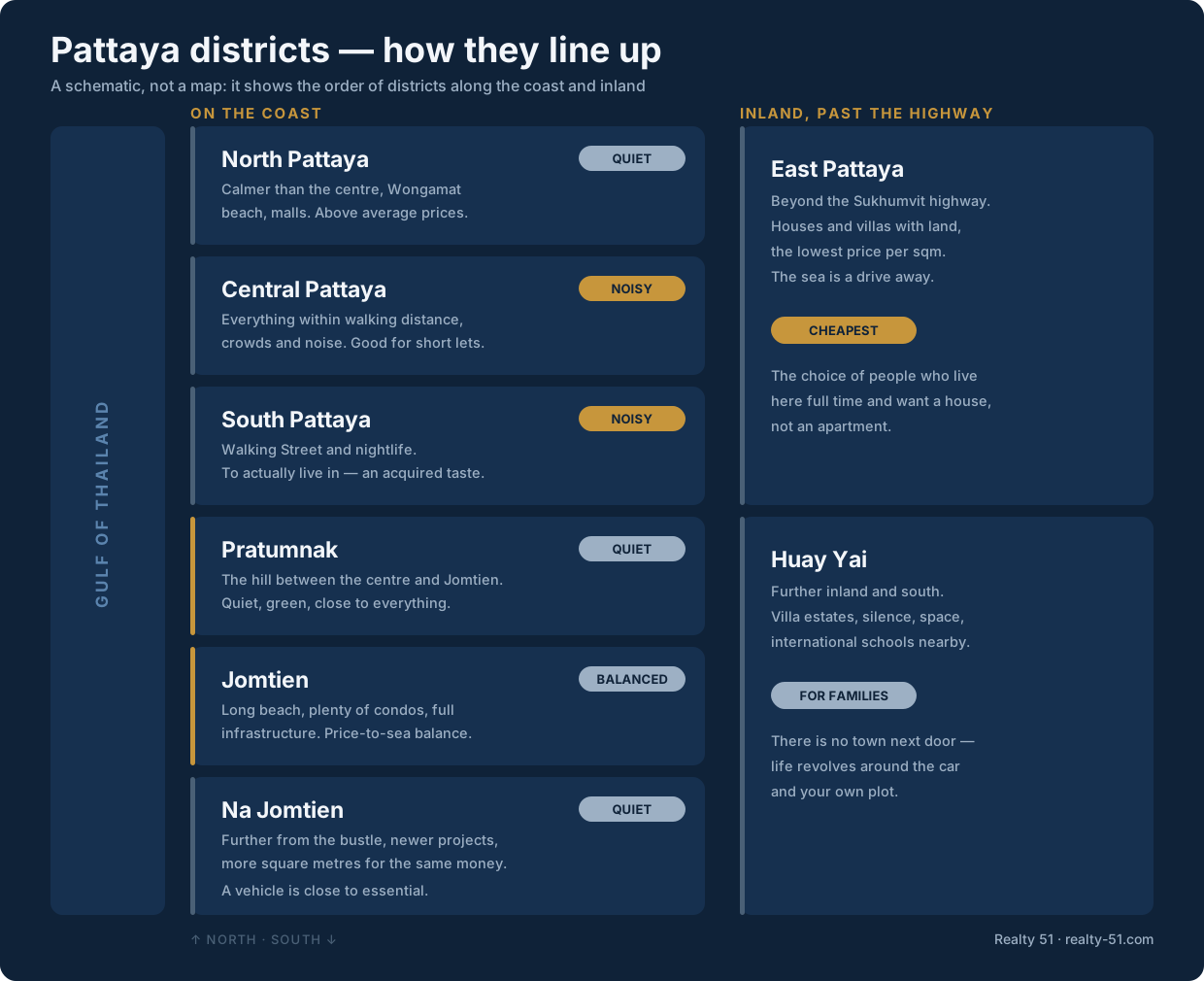
Now, district by district. All eight can be viewed on the interactive district map — with properties and prices in each.
Central Pattaya
Everything is within walking distance: the sea, markets, hospitals, shopping malls, hundreds of cafés. You don't need a car at all.
- The most extensive infrastructure in the city
- The best district for short-term rentals — this is exactly where tourists head
- Easy to resell: demand never disappears
- Noisy. Truly noisy, especially closer to the sea
- Traffic jams and a constant search for parking
- The central beach isn't the one people picture when they think of Thailand
Suits: buyers focused on tourist rentals and people who enjoy the urban rhythm. Current offers are in the selection apartments in central Pattaya.
South Pattaya
This is home to Walking Street and the city's nightlife. It's the district with the most distinctive character of all.
Prices may seem attractive, but think twice: what feels like fun at night becomes background noise until morning when you actually live here.
Suits: short-term rental investors. As a place to live — an acquired taste, and that's no figure of speech.
North Pattaya and Naklua
North of the center it becomes noticeably quieter. Here you'll find Wongamat beach — one of the best in the city — as well as upscale new developments and good restaurants.
- Quiet, yet the city is close by
- A proper beach within walking distance
- A more relaxed crowd: families and permanent residents
- Prices above the city average
- You still need to travel for the main entertainment
Suits: buyers with an above-average budget who value comfort over saving money. See apartments in North Pattaya.
Pratumnak
A hill between the center and Jomtien. Unofficially considered one of the best places in Pattaya — and deservedly so.
- Quiet and green, yet 5–10 minutes to both the center and Jomtien
- Small, pleasant beaches instead of crowded ones
- The district's reputation is reflected in its resale value
- It's a hill: walking home with your shopping isn't always pleasant
- Fewer options to choose from than in Jomtien
Suits: those buying a home to live in, not just for investment. This is a district people buy for themselves. Selection: apartments in Pratumnak.
Jomtien
The most popular choice among foreigners, and for good reason. A long beach, dozens of condominiums for any budget, shops, schools, cafés, and an established international community.
- The best balance of price, sea, and infrastructure
- A huge selection: from studios to penthouses
- Liquidity: property here sells and rents faster than anywhere else
- Dense development, in places very dense
- A "sea view" often means a view between two neighboring towers — always check in person
Suits: almost everyone. If you don't know where to start, start here — with the selection of apartments in Jomtien.
Na Jomtien
A continuation of Jomtien to the south. Quieter, more spacious, newer — and noticeably cheaper per square meter.
- More space for the same money
- Newer projects with good infrastructure within the complex
- Cleaner sea, fewer people
- Without a car or scooter it becomes difficult
- The surrounding infrastructure is still catching up: fewer shops and cafés
Suits: those who value quiet and don't mind driving, as well as those thinking long-term, since the district is developing quickly. What's for sale now: apartments in Na Jomtien.
East Pattaya
Beyond Sukhumvit highway, "mainland" Pattaya begins. No one buys apartments here — people buy houses with land.
- The lowest price per square meter in the city
- Your own house, your own garden, often your own pool — for the price of an apartment near the sea
- Quiet and genuinely spacious
- 15–25 minutes by car to the sea
- A car is essential, there's no way around it
- Lower liquidity: there are fewer buyers for houses than for condos
Suits: those living in Thailand permanently, with a family, who need a house rather than an apartment.
Huay Yai
Even further inland and to the south. Villas in gated communities, international schools, complete silence.
There's no city life here in the usual sense — life revolves around your plot and your car. But the money that buys a two-bedroom apartment in Jomtien lets you acquire a villa with a pool here.
Suits: families with children who need schools and space, and everyone who deliberately leaves the hustle behind.
How to Choose: Three Scenarios
Buying to live in yourself. Take a look at Pratumnak, Jomtien, Na Jomtien. And be sure to read the point below about trying before you buy.
Buying to rent out. Central Pattaya and Jomtien: steady demand year-round. The closer to the sea and infrastructure, the fewer weeks of vacancy.
Buying a family home. East Pattaya and Huay Yai. The difference in price per meter compared to the coast is several times over.
The Advice That Saves Millions
Don't choose a district based on photos and reviews.
Rent a place there for a month. A monthly rental from our catalog will do. Ideally during the rainy season, not in a perfect January. In a month you'll learn what no agent will tell you: how far the shops really are, whether you can hear the neighbors and construction, how long the trip to the beach actually takes, what the street looks like at midnight.
A month's rent costs tens of thousands of baht. A mistake with the district when buying costs millions.
Before choosing a district, it's also worth understanding the types of ownership — they determine both the price and whether you can even register the property in your own name at all. This is covered in the article Foreign Freehold, Thai Freehold, and Leasehold.
If you'd like to get your bearings on your specific situation, write to us. We'll tell you what's really going on in a particular district and a particular building: where construction is underway, where there are problems with the management company, and where it's genuinely worth taking a closer look.
See also
Sources
- District outlines are based on the coastline from OpenStreetMap (© OpenStreetMap contributors, ODbL licence)
- Prices and listing counts — from Realty 51's own catalogue
- District descriptions — based on the agency's own experience in Pattaya
This blog is written by Anna — Realty 51’s AI guide. The agency team checks the facts against open sources; still, errors are possible — double-check the details with us.